
The Sol de Janeiro v. MCoBeauty complaint filed in the Southern District of New York is not, despite the way it has been framed online, a moral argument against dupes as a product type, nor a bid to control scent families, consumer price sensitivity or the language of summer nostalgia. It is, instead, a carefully constructed case that treats the modern dupe economy as a problem of language, packaging, and deliberate similarity, rather than mere inspiration or competitive equivalence.
Sol de Janeiro does not ask the court to police inspiration, nor to penalise affordability, nor even to decide whether dupes are good or bad for the consumer. Instead, it argues that MCoBeauty’s business model, one that the complaint explicitly characterises as relying on “cheap knockoff beauty products”, crossed the line not because it competes, but because it speaks in sameness, and in doing so, uses packaging and marketing language that collapses competitive distance.

This distinction is deliberate, legally testable, and forms the basis of the complaint, because smells “exactly like” is not marketing general wording, it is a factual claim, and factual claims must be provable.
The Central Claim of Sameness
At the centre of the complaint sits a phrase that the modern beauty market has normalised with almost reckless ease: “smells exactly like.”
The complaint pleads that MCoBeauty itself published a YouTube advertisement asserting that its Fragrance Mist No. 1 “smells exactly” like Sol de Janeiro’s Cheirosa Perfume Mist 40, while also claiming it “lasts most, if not all day long” and can “hold better than” the Sol de Janeiro mist. Sol de Janeiro pleads these statements as literally false, stressing that the products differ in ingredients, scent intensity, and dissipation rate.
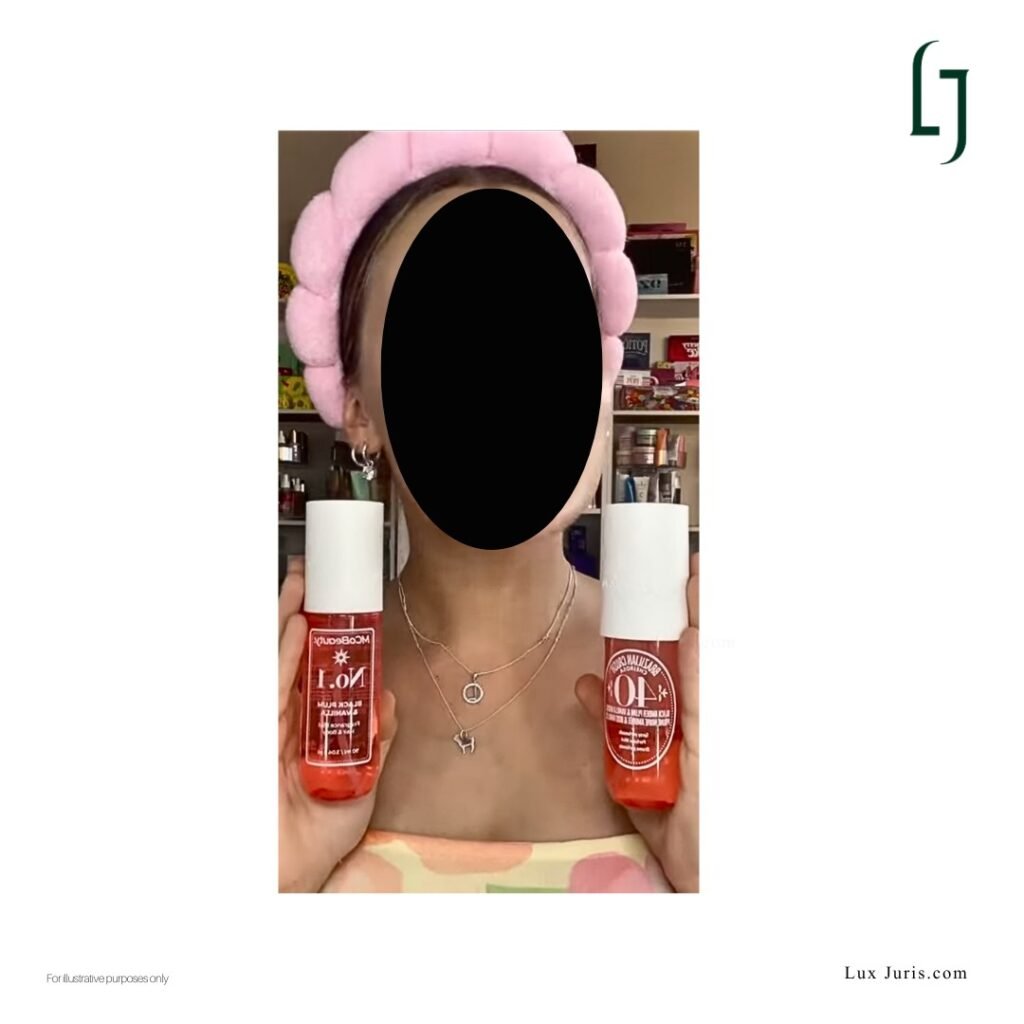
The legal significance here is not subjective. It is evidentiary. Under the Lanham Act, “inspired by” is comparison. “Exactly the same” is declaration, and declarations in advertising law must withstand verification.
Trade Dress as a System, Not an Ornament
Sol de Janeiro pleads trade dress not as protection over individual design features, but as protection over a combined set of non-functional packaging cues that consumers associate with a single source.
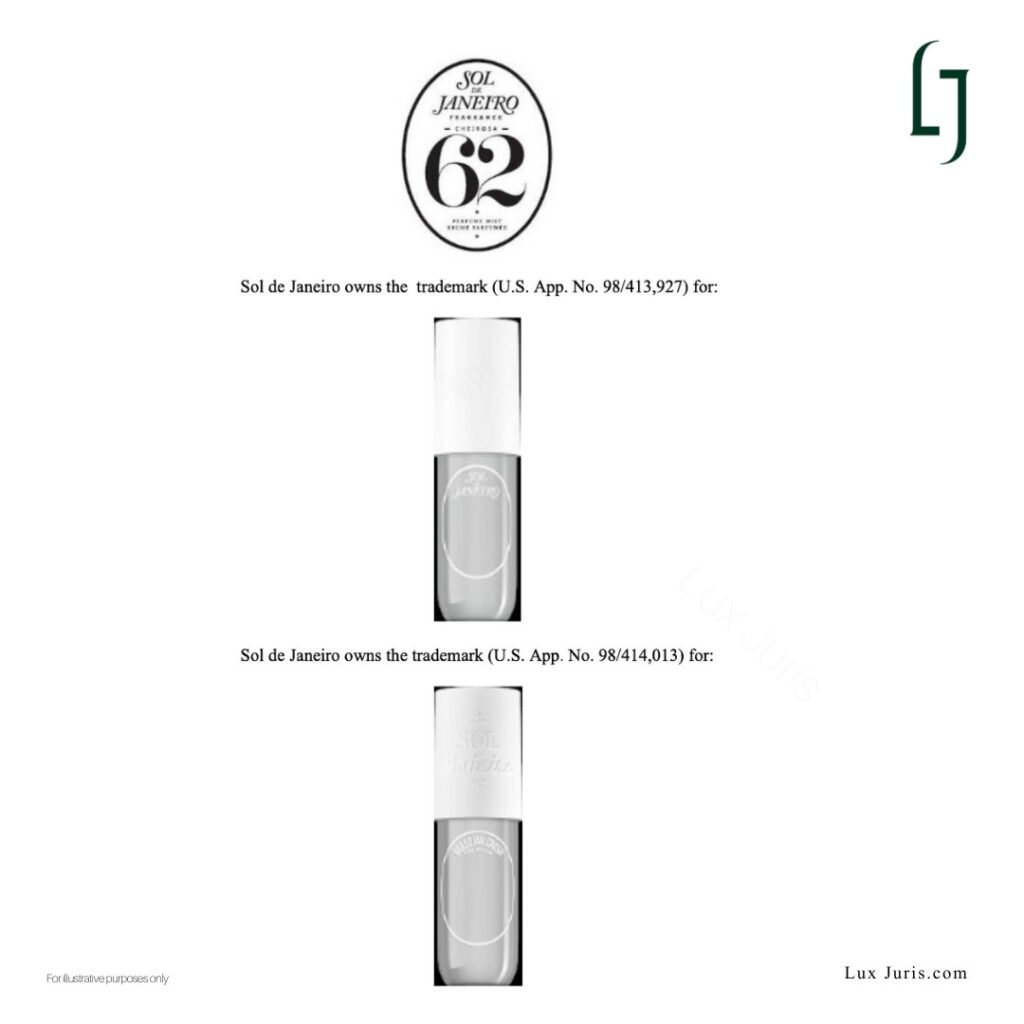
The complaint defines these cues with specificity: an elongated translucent bottle, opaque white embossed cap, central script numerals, full-width geometric label framing, minimal text, and fragrance-specific colour differentiation. Sol de Janeiro argue these elements are non-functional, meaning competitors were not prevented from designing differently. They chose not to.
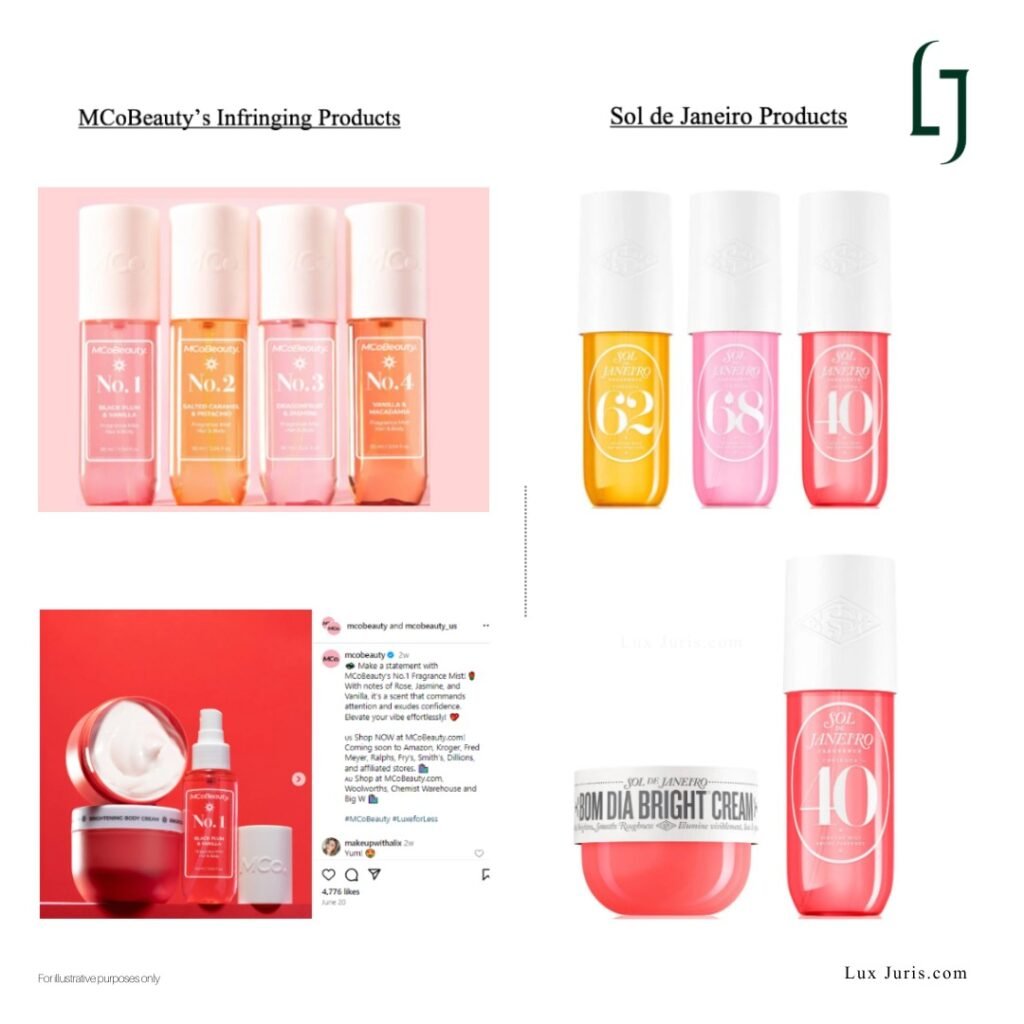
The complaint additionally asserts that MCoBeauty intentionally replicated the design impression of the packaging, a position reflected in consumer remarks describing the result as “copy + paste” and observing that MCoBeauty made no effort to meaningfully differentiate the design.
Sol de Janeiro asserts trade dress protection over a combined system of non-functional packaging cues that consumers read as indicators of source, not decoration.
Influencers, Endorsements, and the Duty to Correct
The complaint’s most contemporary argument may be its treatment of influencer speech. Sol de Janeiro pleads that MCoBeauty affirmatively adopted third-party dupe claims by amplifying, endorsing, liking, and commenting on influencer content asserting identity, including responding “Love it!” to a Trendmood post that encouraged fans of Sol de Janeiro to not miss this launch of allegedly dupe MCoBeauty mists.
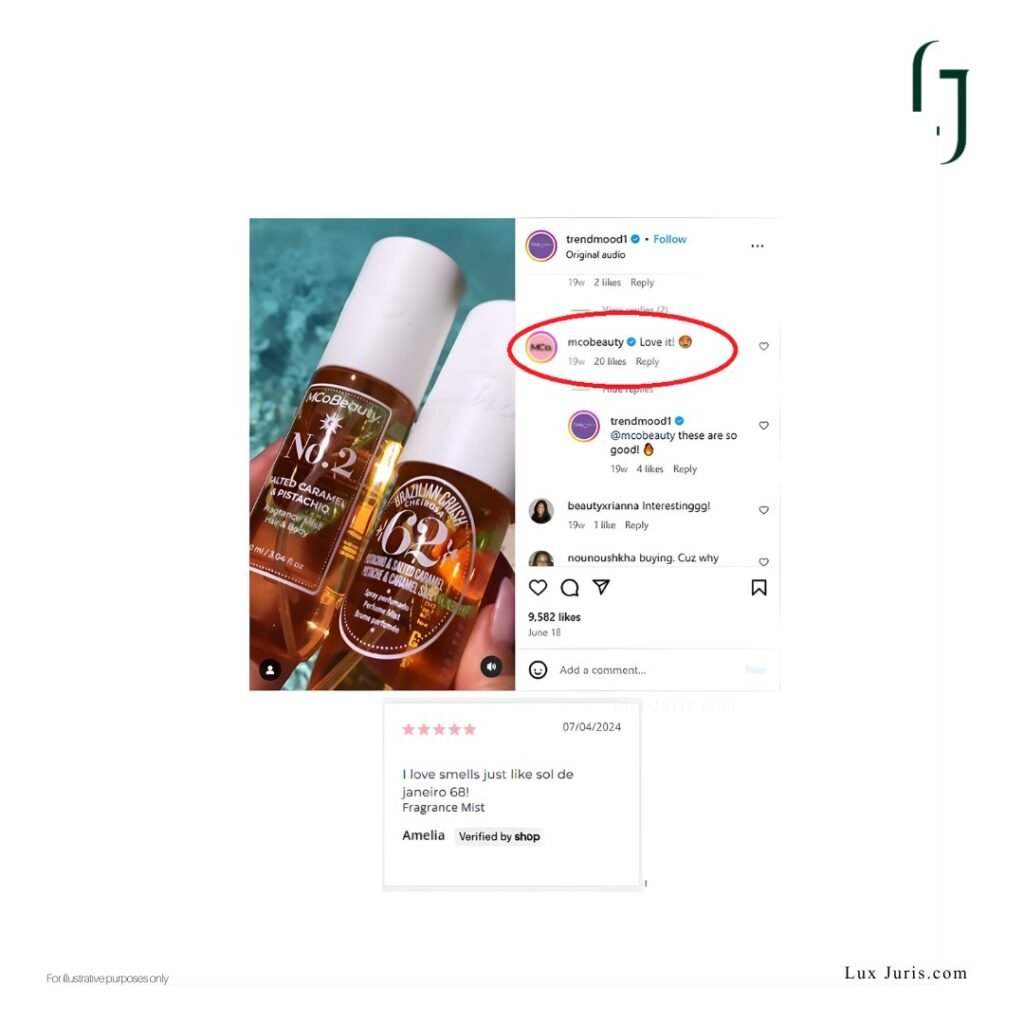
Sol de Janeiro also pleads that MCoBeauty hosts and moderates customer reviews via an internal “review team”, yet refused to remove or correct reviews stating that its products “smell exactly like sol de janeiro”, despite federal obligations and FTC endorsement monitoring duties.
The complaint does not frame this as passive failure, but active ratification, which in false-advertising disputes increasingly positions brands as publishers of claims, not bystanders to them.
Beyond Monetary Relief
The most important outcome of this litigation may not be monetary, although Sol de Janeiro does seek injunctive relief, profits, treble damages, and fees. The case instead sharpens the next legal question courts will face in dupe disputes: not whether similarity is lawful, but whether sameness was claimed, and whether resemblance replaced the consumer’s ability to identify source.
The Limits of “Exactness” in the Dupe Economy
Dupe markets live in the space of comparison. The law intervenes when brands abandon that space and speak in identity instead, particularly where identity is asserted as fact, repeated at scale, and ratified through a company’s own channels.
The boundary Sol de Janeiro asks the court to defend is therefore not one of price or inspiration, but one of factual honesty in sensory goods and design distinction in packaging, where consumers are entitled to alternatives, but not to declarative untruths about equivalence.

In this dispute, the legal issue is not whether a dupe can exist, but whether equivalence was presented as fact rather than as comparison. Sol de Janeiro’s position is that such claims cross the line from competitive reference into misrepresentation, testing the boundary between permissible similarity and impermissible identity claims in markets organised around brand, design, and experience.
Source: