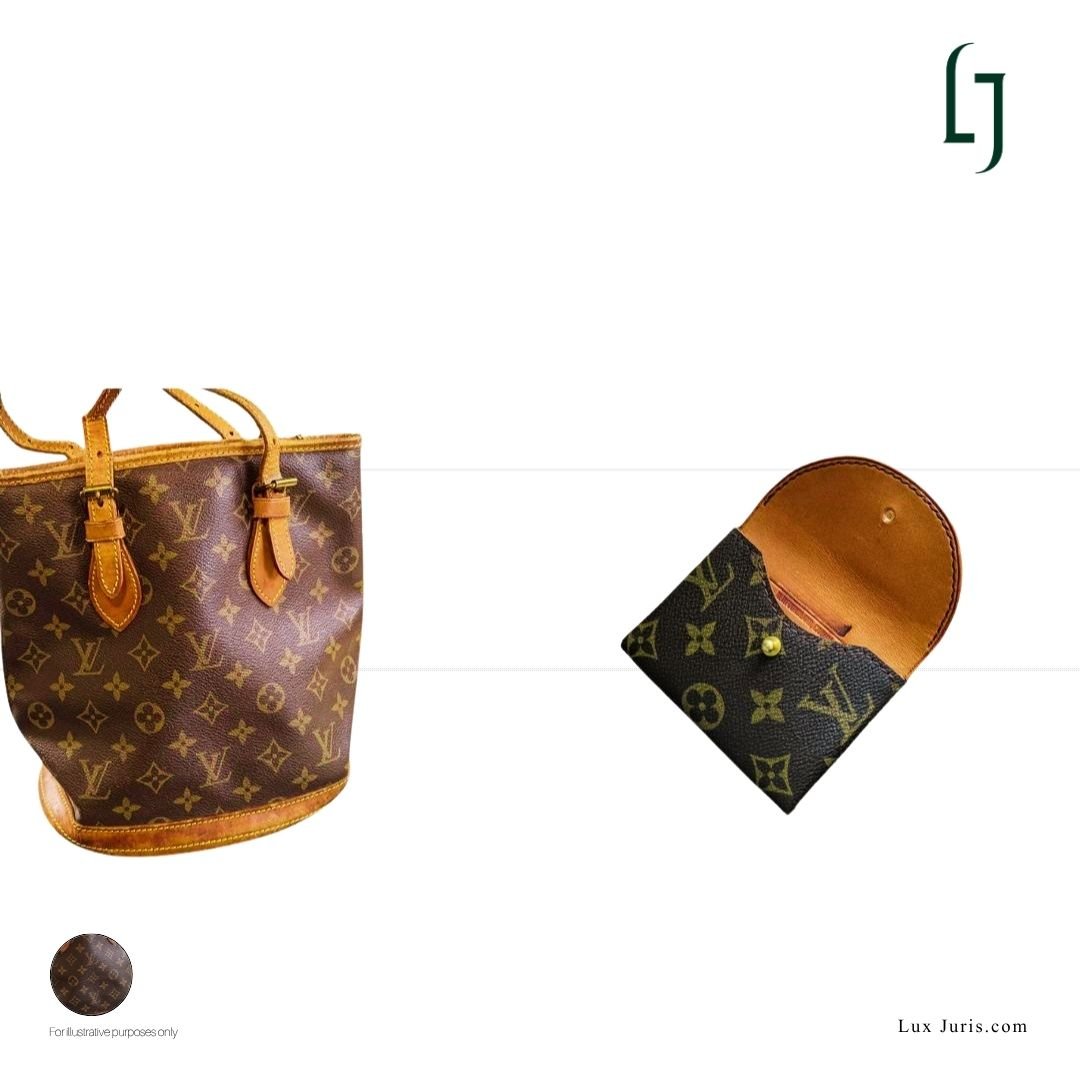
Luxury upcycling can describe different businesses. A customer can take a bag, piece of jewellery or another luxury object they already own to an atelier, ask for it to be transformed, and receive it back in another form. An upcycler can also source luxury objects or components, use them to create new pieces and offer those pieces for sale.
Both involve genuine luxury products and commercial activity, but from a trademark perspective they do not necessarily raise the same questions. Two recent cases illustrate the difference: the South Korean Supreme Court’s decision involving Louis Vuitton and Lee Kyung-han, and the Paris Judicial Court’s decision involving Chanel and Kamad Reworked.
Upcycling for the owner: South Korea
Between 2017 and 2021, Lee Kyung-han repaired and altered luxury bags. Customers brought him their own bags, including Louis Vuitton pieces, and asked him to refashion them into smaller bags, wallets and other items. The transformed pieces were returned to the original owners.
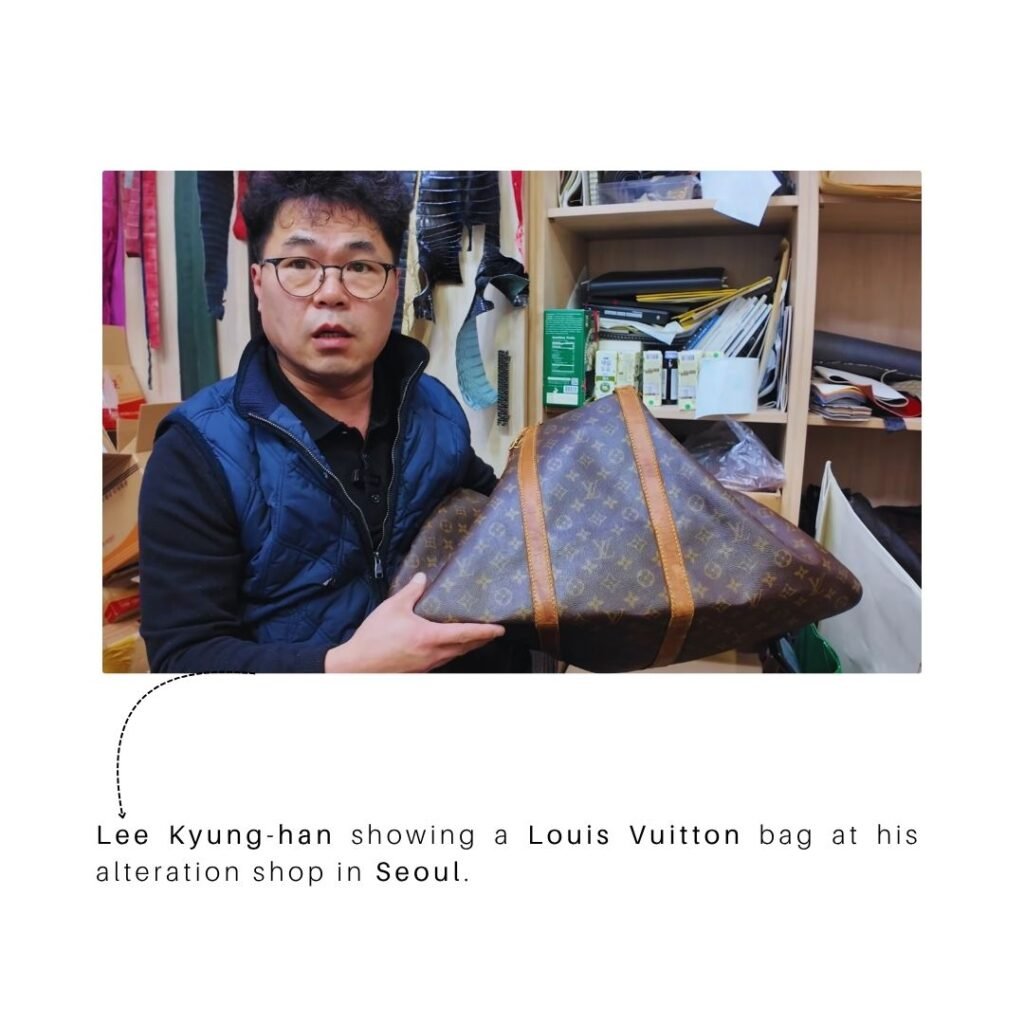
Louis Vuitton sued for trademark infringement in 2022. Two lower courts sided with Louis Vuitton, and Lee was ordered to pay 15 million won (approximately US$10,500) in damages.
On 26 February 2026, the South Korean Supreme Court overturned those rulings and sent the case back.
The Court held that where the owner of a genuine branded product has it altered for personal use, without the resulting item being supplied to or circulated in the market, the continued display of the trademark does not, in principle, amount to trademark use. The same principle can apply where a professional performs the transformation at the owner’s request and returns the item to that owner.
Lee was still operating a commercial business. The Court did not draw the line simply at whether money changed hands. He was being paid for work on the customer’s property rather than producing transformed Louis Vuitton goods for sale to others.
The Court did not create a general exemption for professional upcycling. It identified circumstances that could change the analysis, including who controlled the transformation, its purpose and form, the materials used, ownership of the goods and whether the transformed product was intended for market circulation.
Upcycling for the market: France
In Chanel v. Kamad Reworked, the arrangement was different.
Kamad sold jewellery incorporating components bearing Chanel’s protected signs, including its word marks and interlocking CC monogram. The Paris Judicial Court ruled on 21 May 2026.
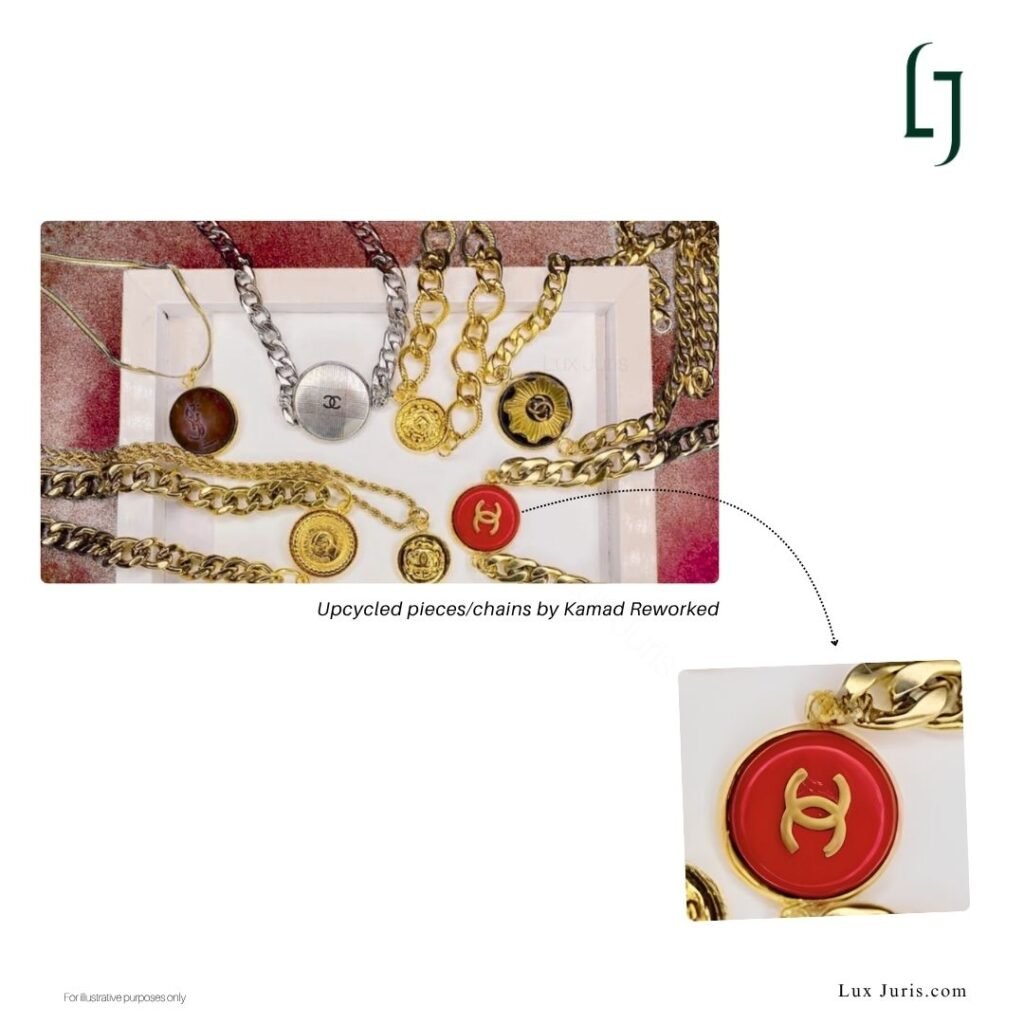
Kamad was creating jewellery for sale, not transforming an object for its existing owner and returning it. It maintained that it worked with authentic second-hand components, but did not enter an appearance through counsel, and the court found insufficient evidence that those components had been placed on the EEA (European Economic Area) market by Chanel or with its consent.
Even assuming that the components came from genuine Chanel products, they had been incorporated with other elements to create another product. The finished jewellery had not, as such, been placed on the market by Chanel or with its consent. The court therefore rejected the exhaustion argument.
It also found trademark infringement. Kamad’s own markings and explanations did not resolve the issue, and the court separately held that a document presented as a certificate of authenticity constituted a misleading commercial practice.
Chanel was awarded €75,000 (approximately US$87,600) in provisional damages for trademark infringement, along with measures including disclosure of sales information and destruction of remaining infringing stock.
What is the business actually selling?
One way to understand the difference is to ask what each business was selling.
In South Korea, the customer paid for work performed on an object they already owned, and the transformed object was returned to them. In France, the customer paid to acquire the transformed product itself.
The judgments apply different trademark laws and should not be treated as establishing a common rule. But the comparison shows why the structure of an upcycling business matters: who owns the original object, who controls the transformation, what the business is being paid for, where the finished object goes and what role the original trademark plays once it gets there.
Authenticity is also only part of the answer. A genuine component does not necessarily establish a right to create and commercialise another product carrying the trademark. The source material may remain genuine while the finished object has another maker, another form and another commercial origin.
Circularity, transformation and IP
Upcycling is gaining commercial and legal attention as regulation increasingly encourages longer product life, repair, reuse and more circular business models.
The EU is moving clearly in this direction. The Ecodesign for Sustainable Products Regulation promotes durability, repairability, reusability and recyclability. Since 19 July 2026, large enterprises are also prohibited, subject to defined exceptions, from destroying unsold apparel, clothing accessories and footwear.
Keeping products and materials in use, however, can raise a different set of questions under IP law. A product may be suitable for repair, reuse or transformation, while trademarks, designs and copyright can still limit how a third party transforms it and what it can subsequently sell.
This does not mean that circularity and IP are inherently in conflict. Circular economy laws do not override IP rights, and IP law does not prevent every form of repair, reuse or transformation. The difficulty arises when extending the life of an existing product involves transforming it into something else and putting that transformed object back on the market.
Luxury upcycling sits directly at this intersection. As circular business models develop, the relationship between longer product life and continuing IP protection will need greater clarity.
Luxury’s next secondary market
The luxury industry has already experienced one significant change in how its products circulate. Secondary luxury has moved pre-owned goods towards an established commercial market, and resale is now part of the economic life of luxury products.
Upcycling may never approach resale in transaction volume, but its impact could be significant for a different reason. Resale largely asks who owns the object next. Upcycling adds another question: what can the object become next?
That question takes the secondary market further into IP. A transformed object can retain the material and protected identity of an established house while acquiring a new form and creative contribution from an independent maker. The legal issue is therefore not simply where one set of rights ends and another begins, but how the rights attached to the original object interact with its subsequent transformation and commercialisation.
Luxury businesses will increasingly have to respond to this development, just as they have had to respond to the growth of resale. That does not mean surrendering trademark control or accepting every unauthorised transformation. Brands have legitimate interests in protecting their IP and preventing consumers from assuming that independently transformed products were made, authorised or approved by them. Equally, upcyclers cannot assume that sustainability or the genuine origin of their materials resolves the IP question.
The EU provides a clear regulatory example of this direction, but pressures around waste, product longevity and sustainable consumption extend beyond Europe. If those pressures continue to shape regulation and business models, the relationship between IP protection and the continued use of existing products will become increasingly difficult to treat as separate questions.
The challenge is therefore not to choose between intellectual property and circularity, but to develop workable ways for the two to coexist. The South Korean and French cases show why that work matters. Upcycling for the owner and upcycling for the market may involve similar acts of transformation, but they can lead to very different IP questions. As circular business models develop, resolving those questions will become increasingly important to the future of luxury upcycling.