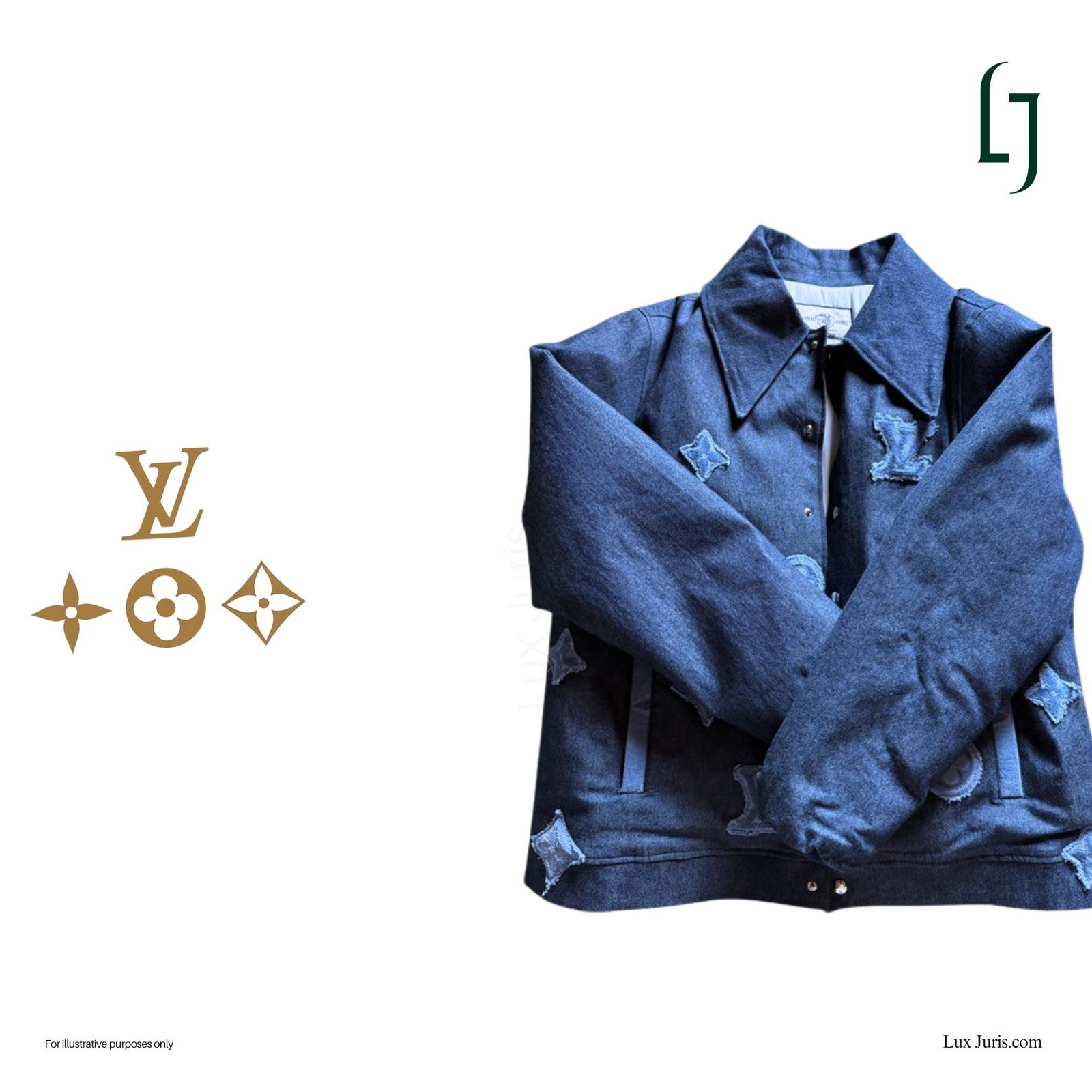
Commercial upcycling is creating a growing legal tension in luxury. A genuine product may be lawfully bought and altered, but that does not necessarily settle what can be done with the trade marks carried on it.
That issue was central to Louis Vuitton’s case against Kamad Reworked. On 17 September 2026, the Paris Judicial Court found Kamad liable for trade mark infringement, unfair competition and parasitism, and ordered Kamad and its three managers to pay €920,000 in damages.
The source products themselves were not the problem. Purchase records showed that they had been acquired in France through auctions or on Vinted, and nothing suggested that they were counterfeit or came from outside the European Economic Area (EEA)
The legal issue arose when branded parts were removed and incorporated into new goods. At that point, authenticity alone was no longer enough.
From genuine products to new goods
Kamad Reworked had operated an eco-responsible fashion business since 2021. The products at issue included T-shirts, sweatshirts, jackets, trousers and jewellery incorporating parts taken from Louis Vuitton products.
Some pieces carried the Louis Vuitton name or the LV monogram outright. Others used sections cut from the house’s monogram canvas, its checkerboard pattern or other protected signs.
Kamad’s defence was that the material was genuine and lawfully sourced. It relied on its own Kamad branding, certificates and labels such as upcycled from or reworked from to explain what the products were and where the materials had come from.
The court did not consider that sufficient.
It looked closely at where the Louis Vuitton signs appeared on the finished goods. They were placed directly on the products, often in locations where consumers would normally expect to see a brand, including the chest of a T-shirt and the sleeve of a jacket.
The court therefore rejected the argument that the signs were purely decorative. It found that they were still capable of indicating commercial origin.
It also considered why those particular pieces had been chosen. On several products, the Louis Vuitton panel was the main element distinguishing an otherwise ordinary garment. Kamad had selected pieces carrying the signs and placed them prominently on its products. The court considered that the commercial attraction came not simply from the material, but from the branding carried on it.
The Kamad labelling did not remove that problem. The court considered that consumers could still believe there was an association, collaboration or approval involving Louis Vuitton.
Why exhaustion did not protect Kamad
A central issue in Kamad’s defence was exhaustion of trade mark rights.
Under French and EU law, once a genuine product has been placed on the market in the EEA by the trade mark owner, or with its consent, the owner generally cannot use its trade mark rights to prevent the further resale of that same product. That principle allows genuine branded goods to circulate through the resale market.
Here, the purchase evidence was sufficient for the court to conclude that Louis Vuitton had consented to the original marketing of the source products in the EEA. Nothing suggested that they were counterfeit or had entered the market from outside the EEA.
But the products Kamad was selling were no longer those products.
Parts had been cut from bags, towels, suitcases and other Louis Vuitton goods and incorporated into new garments and accessories. The court held that the resulting products did not correspond to the products originally placed on the market by Louis Vuitton.
Exhaustion therefore did not apply.
Manufacturing, marketing and promoting the new products required Louis Vuitton’s consent. Kamad had not obtained it.
The source material being genuine, and having circulated in the EEA with Louis Vuitton’s consent, therefore did not settle the infringement question. Using branded components taken from those goods in newly manufactured products was treated as a separate commercial use.
Artistic and environmental arguments
Kamad also relied on the creative and eco-responsible nature of its activity.
On artistic freedom, the court noted that many of the garments took conventional forms and that much of their visual identity came from the Louis Vuitton panels attached to them. Even assuming that some of the jackets were original works, that did not justify using protected trade marks without authorisation as part of a commercial activity.
Kamad had not sought Louis Vuitton’s permission. The court rejected the defence.
The environmental argument received separate consideration.
The court accepted, as a matter of principle, that environmental protection can justify restrictions on property rights in appropriate circumstances. But it found no EU or French rule under which upcycling, by itself, allows a business to override intellectual property rights.
It also looked at the condition and value of the source goods. The purchase records showed that the products retained economic value and were not so damaged that they could no longer be resold.
The court reasoned that destroying products that could still circulate on the second-hand market stimulated demand for new goods where consumers might otherwise have bought second-hand. It therefore concluded that the interference with Louis Vuitton’s trade mark rights pursued a profit-making purpose rather than one of environmental protection.
The court went further. Even if environmental protection had genuinely been the main aim, the interference with Louis Vuitton’s rights would still have been disproportionate because the products retained value and remained capable of resale.
None of this makes upcycling itself unlawful. It rejects the argument that an environmental purpose, by itself, gives a business the right to use another company’s protected trade marks on new commercial products.
More than trade mark infringement
Louis Vuitton also succeeded on claims for unfair competition and parasitism, and this part of the case extended beyond the marks appearing on the finished goods.
The court considered Kamad’s wider commercial presentation. This included stylised flowers taken from Louis Vuitton products, authentic Louis Vuitton goods and packaging used in promotional material, LV provenance labels, the Louis Vuitton name used in Instagram hashtags and a photograph of the house’s artistic director.
It also considered jackets that imitated Louis Vuitton’s Spring–Summer 2023 Ornaments collection.
The court found that these acts allowed Kamad to benefit from Louis Vuitton’s reputation and investment without bearing the corresponding investment itself. It awarded €160,000 in damages for unfair competition and parasitism.
Louis Vuitton did not succeed on every point. Its claim relating to Kamad’s use of 1984 in the name Bomber Paris 1984 was dismissed.
The court also rejected part of Louis Vuitton’s argument that certain Kamad products damaged the house’s image simply because of their style. Louis Vuitton had referred, among other things, to a bulletproof-vest-style gilet. The court noted that, through its own commercial partnerships and collaborations, Louis Vuitton had previously associated its marks with repurposed and urban-culture products including a life jacket, boxing gloves, an aviator helmet and other unconventional items.
The order
Kamad and its three managers were ordered, jointly and severally, to pay €750,000 for infringement of Louis Vuitton’s well-known marks and a further €10,000 for infringement of another figurative mark.
Together with the €160,000 awarded for unfair competition and parasitism, the total damages came to €920,000.
The court also prohibited Kamad and its managers, until the relevant marks expire, from producing, marketing or promoting clothing, clothing accessories or jewellery using pieces of authentic Louis Vuitton products bearing all or part of the marks identified in the judgment.
That prohibition carries a provisional penalty of €1,500 for each product manufactured or marketed in breach of the order.
The identified infringing products were ordered to be destroyed. The court rejected Louis Vuitton’s request for a recall from commercial channels, finding that such a measure would be impossible to enforce because the sales could not be traced precisely.
Kamad and the managers were also ordered to remove content depicting or promoting the infringing products and free-riding signs from the relevant websites and social-media accounts. Kamad was required to publish a summary of the judgment online for three months, and publication was also ordered in two fashion-press titles chosen by Louis Vuitton.
Kamad was ordered to pay €75,000 towards Louis Vuitton’s non-recoverable legal costs, while each of the three managers was ordered to pay €15,000.
The managers were also held personally liable. The court found that they had actively directed the activity, made the underlying decisions collectively and continued despite Louis Vuitton having made its objections known. Their conduct was treated as faults of particular gravity, separate from the normal exercise of their management functions.
What the judgment means for commercial upcycling
This is not Kamad Reworked’s first trade mark dispute over upcycling.
Earlier in 2026, Chanel also succeeded against Kamad over jewellery incorporating Chanel-branded components.
The Chanel and Louis Vuitton decisions point to the same trade mark problem. Buying a genuine branded object does not necessarily carry with it the right to use its trade marks when parts of that object are incorporated into a new commercial product.
The Louis Vuitton judgment goes further in showing how that question is assessed. The court looked at the role the marks played on the finished products: where they appeared, how prominently they were used and whether they could still indicate commercial origin or suggest an association with Louis Vuitton. Kamad’s own branding and references to upcycling did not remove that issue.
My view is not that upcycling should be pushed out of the market. There is a real place for independent designers and ateliers to give existing luxury objects another life. But the design of the new product cannot ignore the IP that remains attached to the material being used.
The more the original trade mark contributes to the identity or commercial appeal of the transformed product, the harder it becomes to separate the new work from the rights of the luxury house.
That leaves room for different approaches: centre the product more clearly on the designer’s own craft and authorship, reduce reliance on the original brand’s protected elements, or seek authorisation where those elements remain important to the finished work.
Commercial upcycling does not need to become an extension of the luxury houses. But it does need clearer ways to distinguish independent creative transformation from commercial use of another brand’s trade marks.
Source: