A brand does not always sue as soon as it becomes aware of a competing lookalike. The accused product may initially sell in relatively small numbers, occupy a limited competitive position or simply not justify the cost of litigation. That calculation can change, however, if the same product later reaches more consumers, moves into new sales channels or begins competing more directly with the original brand.
That question sits at the centre of Birkenstock US BidCo, Inc. v. White Mountain International LLC. On 16 September 2026, the US District Court for the District of Massachusetts refused to end several of Birkenstock’s trade mark, trade dress and related claims on the basis that Birkenstock had waited too long to sue.
The court did not decide that White Mountain had infringed Birkenstock’s rights. It decided something narrower: there were factual disputes that prevented White Mountain from defeating those claims at summary judgment through the defence of laches.
A dispute with a long history
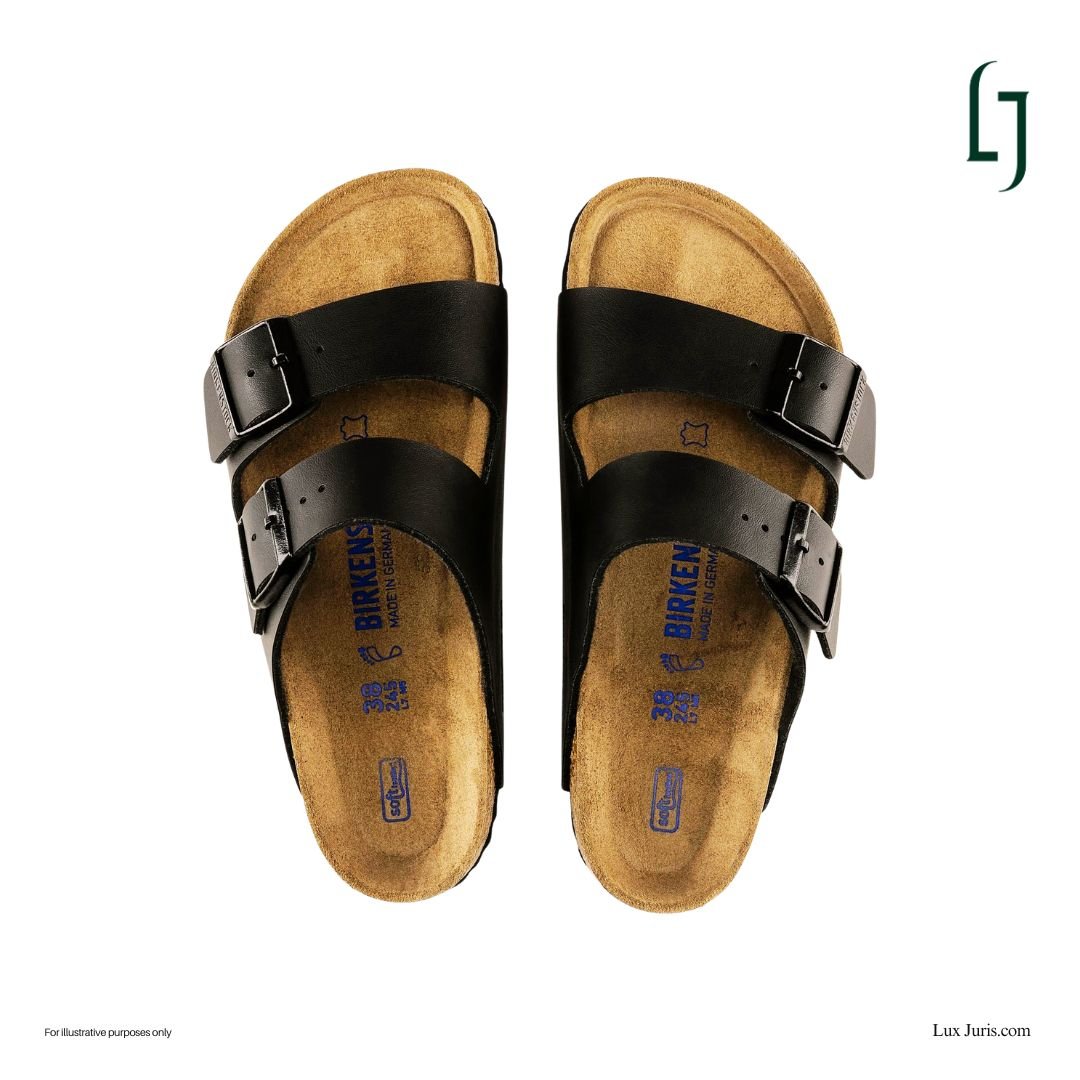
Birkenstock has sold footwear in the United States for decades. The Arizona has been sold there since 1973, the Boston since 1976 and the Mayari since 2009. Birkenstock claims trade dress rights in those three designs and alleges that White Mountain’s Helga, Bari and Gracie infringe them. It also alleges infringement of its registered bone-pattern outsole trade mark.
There is also a patent infringement claim concerning the Buckley clog, but that claim was not challenged in the motion decided in September. The order therefore focused on Birkenstock’s trade mark, trade dress and related unfair competition claims.
Some of White Mountain’s accused products have been on the market for a long time. Between 1992 and 1995, White Mountain contracted with a retailer in relation to the sale and purchase of the sandal design that later became known as the Helga. White Mountain began selling the Helga in 1995, including under its own WHITE MOUNTAIN brand and under private labels. The product had been sold and marketed on QVC since at least 1998.
The clog later known as the Bari has a similar history. White Mountain began selling it in 1995 under the name Getty. It appeared on QVC from at least 1998, was marketed and offered online from 2006 and was renamed Bari around 2018.
The Gracie came later. White Mountain says that it began selling a sandal called Carolyn in 2016 and renamed it Gracie around 2017. Birkenstock disputes that Carolyn and Gracie were the same shoe and also disputes part of White Mountain’s account of its private-label sales of that design.
White Mountain argued that Birkenstock had known about the allegedly infringing products for years but did not file its lawsuit until 2024. Its argument relied on a legal doctrine called laches.
What does laches mean?
Laches is a legal rule concerned with unreasonable delay.
In simple terms, a court can sometimes prevent a rights holder from pursuing a claim where it knew, or should have known, about the conduct it now complains of, failed to act with reasonable diligence and that delay caused unfair prejudice to the other side. Prejudice can include lost documents, unavailable witnesses or other difficulties caused by the passage of time.
There was evidence that people at Birkenstock had been aware of lookalike footwear for a long time. A 1994 magazine article quoted Birkenstock’s then sales director discussing cheaper knockoffs and saying that the company did not really have plans to attack them. A former Birkenstock employee also recalled White Mountain being highly visible in the 1990s and said that the internal approach was to focus on what distinguished Birkenstock rather than pursue every similar product.
For the purpose of the present dispute, Birkenstock contended that it became aware of White Mountain and the accused products no later than approximately 6 March 2018. It did not file suit until 11 March 2024.
That timing created a legal problem. The court used the four-year limitation period under Massachusetts law for an analogous claim as the relevant period for assessing laches. Because Birkenstock sued more than four years after the date by which it said it knew about White Mountain and the accused products, laches was presumed to apply. Birkenstock therefore had to rebut that presumption.
Its principal argument was that White Mountain’s allegedly infringing activity had changed.
When allegedly infringing activity becomes more significant
Birkenstock relied on a principle known as progressive encroachment.
The principle recognises that a trade mark owner does not necessarily have to bring an expensive lawsuit against every allegedly infringing product the moment it becomes aware of it. The earlier activity may be so small in scope that a reasonable rights holder decides litigation is not worth the cost.
The position may change if the defendant later alters its activities in a way that places it more directly in competition with the rights holder and increases the likelihood of confusion.
The court therefore considered three questions. Could Birkenstock reasonably have decided not to sue earlier? Did White Mountain later materially alter its allegedly infringing activities? And, once that alteration occurred, did Birkenstock wait an unreasonable length of time before taking legal action?
For Birkenstock, 2018 was the important dividing point.
The sales evidence gave some support to its position. With one exception in 2014, White Mountain’s annual sales of the three accused products between 2013 and 2017 represented well below 1 per cent of Birkenstock’s annual sales of the corresponding products.
Between 2018 and 2024, White Mountain’s sales of those three products represented between 1.8 and 3 per cent of Birkenstock’s corresponding sales.
The court did not decide that White Mountain’s earlier activity was too small to justify legal action. It found that there was a genuine factual dispute over whether Birkenstock could reasonably have regarded the earlier activity as sufficiently limited that litigation was not yet worth pursuing.
The move online
The change in sales was accompanied by changes in White Mountain’s business.
Around 2018, Robin DeCarlo Conners joined White Mountain to build its internet business and handle drop-shipping. Between 2017 and 2018, sales of the accused products increased by nearly 700 per cent, while the number of customers buying them increased by 271 per cent. Sales through Amazon increased by more than 300 per cent and sales through Shoes.com increased by more than 2,200 per cent.
The expansion continued. White Mountain’s drop-ship business increased from less than US$1 million in 2018 to US$24 million in 2024. The court also recorded an increase in sales of the accused products from US$4.8 million to US$16.8 million over that period.
The order notes that the expert calculations underlying these figures included sales data for the Bueno, another accused product that was not part of this particular laches motion. That qualification is important when reading the headline sales figures.
Birkenstock argued that this was more than ordinary business growth. Its case was that White Mountain had made a strategic shift towards e-commerce and drop-shipping, bringing the accused products more directly into competition with Birkenstock.
White Mountain disagreed. It pointed out that it already had an online business before 2018 and argued that the later increase in e-commerce and drop-shipping was simply the natural expansion of its existing business.
Growth alone does not establish progressive encroachment. The question is whether the allegedly infringing activity changed in a way that placed the seller more squarely in competition with the rights holder and increased the likelihood of consumer confusion.
The court found evidence supporting both positions. It therefore could not decide at summary judgment whether White Mountain materially changed its activities around 2018 or merely expanded an existing business.
The six-year delay still matters
Birkenstock’s reliance on progressive encroachment creates another difficulty.
If 2018 was the point at which White Mountain’s allegedly infringing activity became sufficiently significant to justify litigation, why did Birkenstock wait until 2024 to file its case?
The court expressly recognised that problem. Birkenstock had not fully explained why it waited six years after the point at which it said the infringement had become actionable and provable. It referred to COVID and the general difficulties caused by the pandemic, but the court said that the pandemic did not justify such a long delay.
Birkenstock had, however, taken some action before filing suit.
In December 2021, it sent White Mountain a cease-and-desist letter. That letter did not expressly assert trade dress rights in the Arizona, Boston and Mayari. Instead, it referred to Birkenstock’s design patents, copyrights and registered trade marks. Even so, the letter accused White Mountain of copying the overall appearance and key distinguishing elements of Birkenstock footwear and demanded that certain conduct stop.
In May 2023, Birkenstock expressly asserted trade dress rights in the Arizona, Boston and Mayari and accused White Mountain’s Helga, Getty/Bari and Gracie of infringement.
The correspondence went beyond a single warning. White Mountain proposed a sell-down of its remaining Helga and Bari inventory. Birkenstock responded with conditions under which it might agree to a limited sell-down period. White Mountain later denied infringement but said that it had discontinued the accused tread pattern on the Helga and Bari in an effort to resolve the dispute.
This mattered because courts can distinguish between a rights holder simply sending a warning and then doing nothing, and parties genuinely trying to resolve a dispute without litigation.
The record before the judge did not contain a complete account of the communications between Birkenstock and White Mountain from December 2021 until the filing of the lawsuit in March 2024. The court therefore could not determine whether those efforts justified part of Birkenstock’s delay.
What was lost while Birkenstock waited?
White Mountain also argued that Birkenstock’s delay had made the case more difficult to defend.
There was evidence supporting that argument. Birkenstock no longer has pre-2014 sales records for the Arizona and Boston. White Mountain argued that this makes it more difficult to challenge whether those designs had acquired the consumer recognition required for trade dress protection at the relevant time. It also argued that consumer surveys cannot now recreate market conditions from decades earlier.
Some witnesses are no longer available. Margot Fraser, the founder of Birkenstock USA, died in 2017 and therefore cannot be questioned about Birkenstock’s historical awareness of, and response to, competing products.
The court accepted that White Mountain had presented ample evidence of evidentiary prejudice caused by the passage of time. The difficulty for White Mountain was the timing of that prejudice.
The court found no evidence of additional evidentiary prejudice arising after 2018, the year by which Birkenstock says it first became aware of White Mountain and the accused products. Whether White Mountain suffered economic prejudice from Birkenstock’s failure to sue promptly after 2018 also remained disputed.
What the court decided
White Mountain asked the court to grant partial summary judgment on Birkenstock’s trade mark, trade dress and related claims because of laches.
The court refused.
There remain factual disputes over whether White Mountain’s earlier allegedly infringing activity was sufficiently limited that Birkenstock could reasonably decide not to sue, whether White Mountain materially changed its activities around 2018, whether Birkenstock then acted within a reasonable period and what prejudice White Mountain suffered during the relevant period.
White Mountain’s motion for partial summary judgment was therefore denied.
That result should not be confused with a finding that Birkenstock has won the underlying IP dispute.
The order does not decide whether Birkenstock ultimately has enforceable trade dress rights in the Arizona, Boston or Mayari, whether the relevant design features are functional, whether they have acquired the necessary consumer recognition, whether consumers are likely to be confused or whether White Mountain infringed Birkenstock’s rights.
Nor has the court finally rejected White Mountain’s laches defence. The order decides only that, on the present record, factual disputes prevent that defence from ending Birkenstock’s claims at summary judgment.
When does a brand need to act?
The case raises a practical problem for brands that monitor dupes and lookalikes over long periods.
The existence of a potentially infringing product does not necessarily mean litigation must begin immediately. An alleged infringement may initially be too limited to justify the cost and scale of a court case. But that assessment can change if the product becomes substantially more commercially significant, moves into new channels or begins competing more directly with the brand.
The September order does not establish that an increase in online sales automatically gives a rights holder a new period in which to sue. White Mountain may ultimately show that its post-2018 growth was simply the natural continuation of a business that Birkenstock had known about for years.
Birkenstock has nevertheless been allowed to argue that the nature of the competitive problem changed.
The case is therefore still at an interim stage. White Mountain has failed, for now, to end Birkenstock’s trade mark, trade dress and related claims on laches grounds, but the court has not yet decided whether those rights are valid or whether White Mountain infringed them. Those questions, together with the laches defence itself, remain to be resolved as the litigation continues.
Source