The Delhi High Court has disposed of a trade mark infringement suit brought by Hermès International against Eziere Technologies Private Limited concerning the sale of unauthorised replicas and lookalikes of several of its products, including handbags, sandals and accessories. The defendant disclosed during the proceedings that it had purchased the disputed goods through Alibaba.com.
In its order dated 2 November 2026, the Court accepted the defendant’s undertakings to cease dealing in the disputed products, remove the offending listings and refrain from infringing Hermès’ registered trade marks. The French luxury house did not press for damages.
The dispute
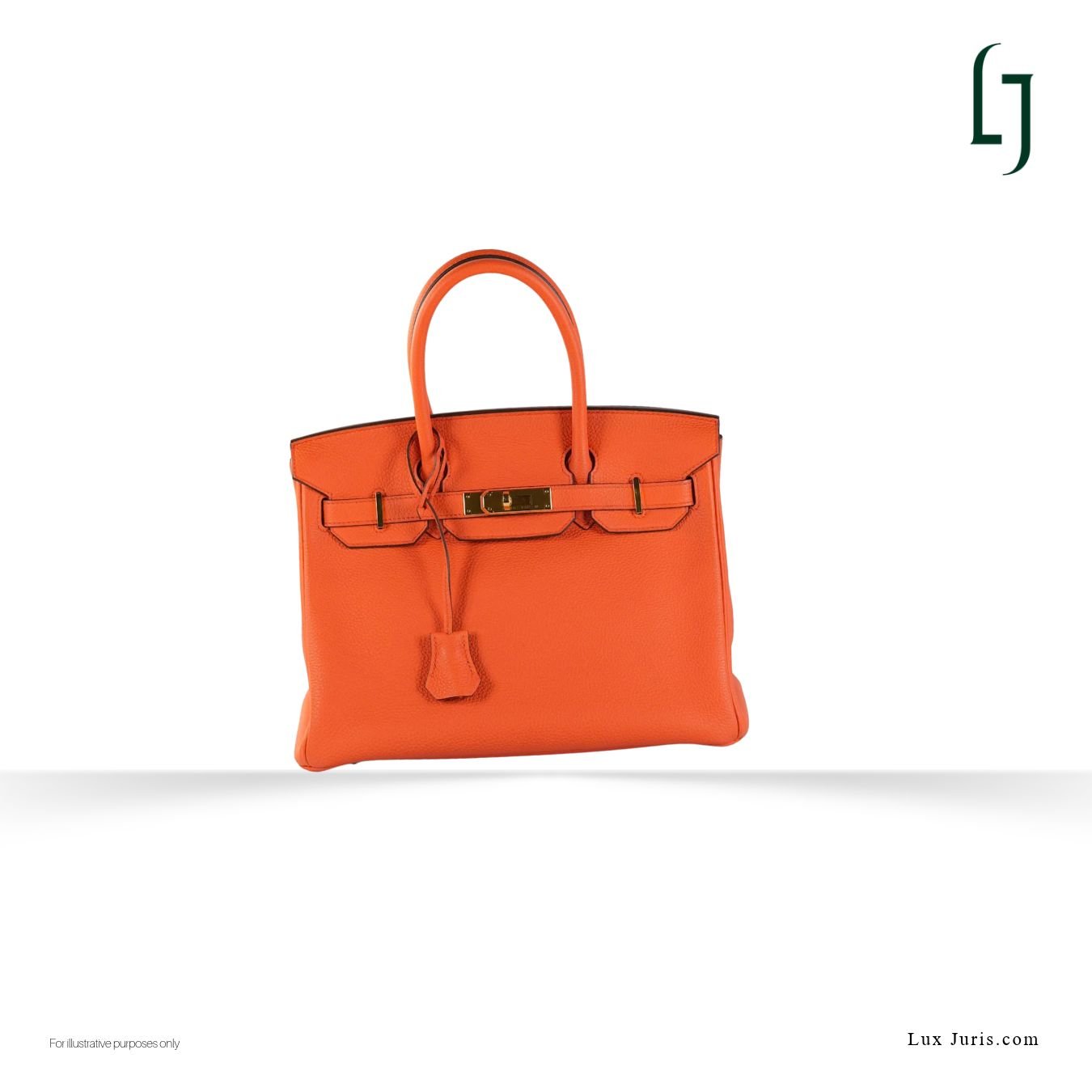
The proceedings concerned unauthorised replicas and lookalikes of Hermès’ Birkin, Picotin and Bolide handbags, H Oran sandals, Oran Nano and Rodeo bag charms, and silk ribbons. Hermès brought claims of trade mark infringement, passing off, dilution, tarnishment, unfair competition and misappropriation, among others.
Hermès relied on several trade mark registrations, including the three-dimensional shape of the Birkin handbag, the H Oran mark, the H logo and the H Raye logo. These registrations concern product shapes and figurative marks rather than conventional word marks.
Protection of the Birkin and Oran in India
The Court referred to two earlier decisions concerning Hermès’ trade marks and their well-known status in India.
On 24 November 2025, in Hermès International v. Macky Lifestyle Private Limited, the Delhi High Court declared the three-dimensional shape of the Birkin handbag a well-known trade mark. On 8 February 2023, in Hermès International v. Crimzon Fashion Accessories Private Limited, the Court recognised the H Oran mark as a well-known trade mark.
These decisions are particularly relevant to enforcement against lookalikes. Unlike conventional counterfeits, lookalikes may reproduce the distinctive appearance of a luxury product without displaying the luxury house’s name. The order does not specify how the disputed goods were branded.
Where the shape or a distinctive feature of a product independently functions as a trade mark, the absence of the original brand name does not necessarily prevent a claim of infringement.
The recognition of these marks as well-known also affords Hermès broader protection under Indian trade mark law, subject to the applicable statutory requirements.
Removal of listings and disclosure of the source
When the matter came before the Court on 5 October 2026, counsel for Eziere Technologies submitted that the company had already removed images of the infringing products from its website and Instagram account.
Hermès indicated that it would not press for damages if the defendant provided a satisfactory undertaking. On 29 October 2026, the matter was adjourned to allow the parties to resolve the dispute.
Hermès also insisted on disclosure of the source of the infringing goods. Counsel for Eziere Technologies stated, on instructions, that the company had purchased them through Alibaba.com. The order, however, does not identify the individual suppliers or manufacturers from whom the goods originated.
The defendant further agreed to hand over eight remaining damaged units of the disputed products to counsel for Hermès.
The undertaking and settlement
In an affidavit dated 31 October 2026, Eziere Technologies undertook to cease dealing in the disputed products, remove the offending listings and refrain from infringing Hermès’ registered trade marks or passing off its goods as those of the French luxury house.
Counsel for the defendant submitted that the company had infringed Hermès’ proprietary rights in only some of its trade marks. The defendant nonetheless acknowledged Hermès’ rights in a wider range of trade marks and products.
These included the registered Birkin bag shape, H device marks, H Oran, Rodeo bag charms, silk ribbons, and the Picotin, Bolide and Kelly handbags. The Kelly handbag was not among the disputed products identified in the Court’s order.
The Court accepted the undertakings contained in the affidavit, together with the further undertakings given during the proceedings. The defendant acknowledged that any breach would expose it to contempt proceedings.
Hermès agreed not to pursue damages and certain other reliefs sought in the plaint. The Court decreed the suit in terms of the remaining agreed reliefs and directed a refund of the entire court fee.
Enforcing rights against lookalikes
The disclosure concerning Alibaba.com raises a broader consideration for luxury houses enforcing their intellectual property rights against retailers.
Removing listings addresses the immediate availability of infringing goods but does not necessarily prevent similar goods from reaching the market through other sellers. Information about procurement channels can help luxury houses identify suppliers and distributors against whom further enforcement action may be considered.
The case also illustrates the value of securing trade mark protection for distinctive product shapes and features. For luxury houses whose products are recognisable by their appearance alone, such registrations can provide a basis for enforcement against lookalikes even where the original brand name is not reproduced.
However, as the dispute was resolved through a settlement, the Court did not independently assess the resemblance of each product, distinguish between replicas and lookalikes, or determine the individual claims of infringement, passing off, dilution and tarnishment on their merits.
Source: