
How Far Is Too Far? When Dupes Challenge Lululemon, Adidas, Dr. Martens
That question sits at the centre of new lawsuits by Lululemon, Adidas and Dr. Martens, who claim Costco, Fashion Nova and Shein are selling lookalike clothes and shoes that test how far trade mark rights and settlement deals can reach. As more shoppers choose cheaper dupes over the originals, these cases ask whether brands can still protect what makes their products distinctive or if dupe culture has simply grown too strong to control.
Parties Behind the Lawsuits
Each case has a similar shape. Lululemon filed suit against Costco in June 2025 in California, claiming the retailer sells lower-cost versions of its popular SCUBA hoodies, DEFINE jackets and ABC pants. Lululemon argues that unique seams, panels and cuts make its clothing instantly recognisable and that Costco’s Kirkland label and other brands like Danskin and Spyder copy these distinctive features.

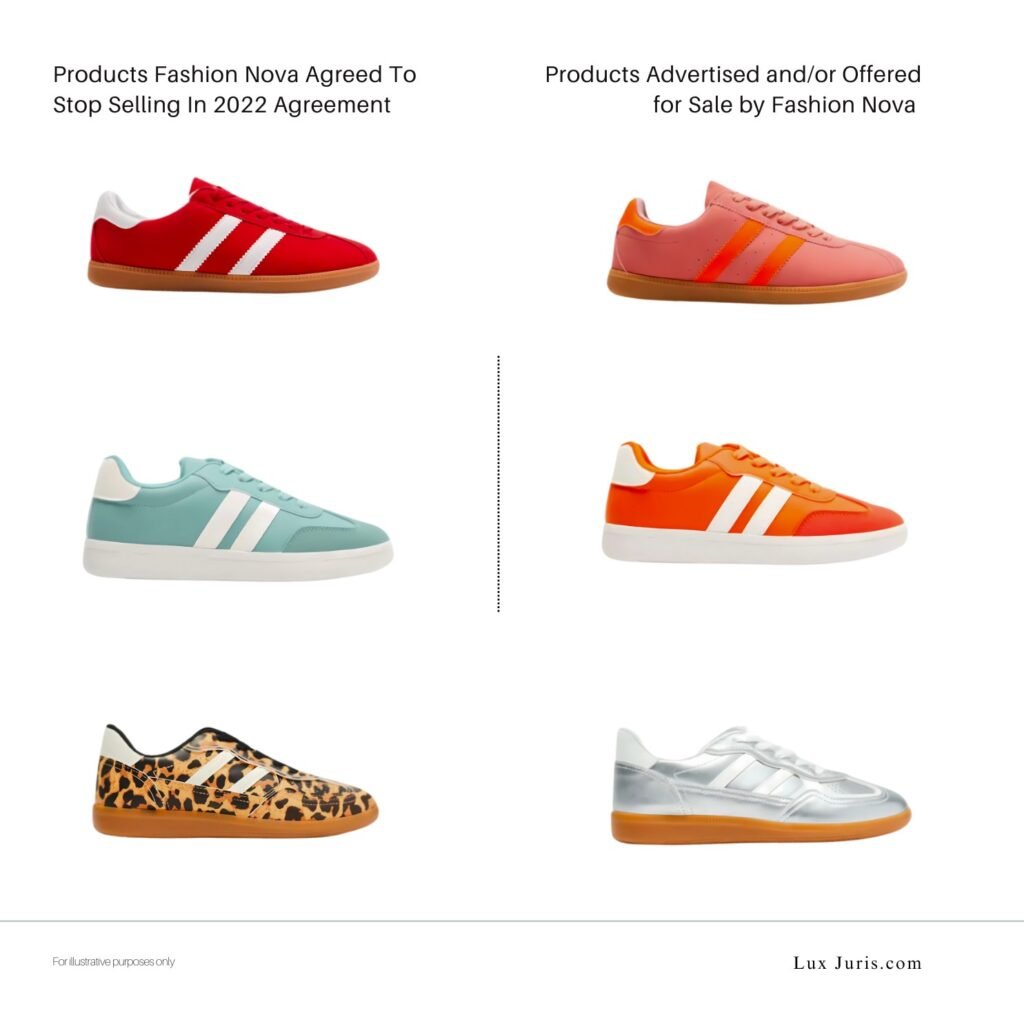
Adidas is back in court with Fashion Nova, the fast-fashion chain known for turning runway trends into budget pieces at high speed. Adidas says Fashion Nova’s use of stripes on its clothing breaches a 2022 settlement that was meant to stop any products that look too close to the iconic Three Stripe mark.
Dr Martens is suing Shein, claiming it ignored a 2022 settlement by selling new batches of boots that closely resemble its Classic and Jadon designs, despite an agreement meant to handle repeat infringement through quick cure payments.

What the Brands Are Claiming
The legal claims across these disputes follow a similar pattern, with trade mark infringement, unfair competition and dilution at their core. Lululemon asserts trade dress and design patent claims, Adidas includes counterfeiting and breach of contract, while Dr. Martens likewise combines trade mark claims with breach of contract allegations.
At the centre of each lawsuit is the claim that the brands’ designs and trade marks are distinctive enough that similar products can mislead buyers or diminish the brand’s value. Trade dress protects the overall look of a product when that look identifies its source and is not purely functional. Trade mark infringement turns on whether buyers are likely to believe a retailer’s product is linked to or approved by the brand.
Dilution arises when a mark is so widely recognised that even without confusion about origin, lower-cost copies blur its distinctiveness or harm its reputation. In the Dr. Martens and Adidas actions, the breach of contract claims test whether earlier settlement agreements were honoured and whether they remain enforceable when new alleged copies appear.
How Retailers Usually Defend These Cases
Retailers facing these claims tend to argue that the design features are common and functional or too generic to belong to any one brand. Costco will likely argue that seams and panels on a hoodie help it fit well and are not unique. Fashion Nova may say that stripes on sportswear are decorative, not an exclusive badge of origin. Shein might stress that any paid cure agreements should close the door to further claims for the same products.
Retailers also point to price and context. They argue that shoppers buying a twenty-dollar hoodie or a budget pair of boots know they are not getting the real premium version. In many cases, they say buyers accept small differences because they want the look, not the brand name.
What the Law Requires the Brands to Prove
For trade mark and trade dress claims, brands must show that an average shopper is likely to believe the product comes from or is endorsed by the brand. Courts weigh factors such as the strength of the mark, the similarity of the designs and any evidence of confusion. In the case of trade dress, they must also prove that the visual features are distinctive, not purely functional, and that buyers associate the overall look with a single source.
For dilution, the standard is higher, brands must show the mark is widely recognised by the general public, not just in a niche market.
When there is a settlement, courts check if it covers the new products and whether the brand followed the agreed steps to deal with any breach. If either part falls short, the brand’s claim may be limited.
Settlements as a Practical Tool and a Risk
These cases show how settlements often take the place of full litigation when a brand first identifies an alleged infringer. Settlements can reduce legal costs, avoid lengthy proceedings and establish clear terms for managing future disputes. Both Adidas and Dr. Martens have relied on settlement agreements to resolve repeat conflicts, but the outcomes show the limits of this approach when alleged infringers treat settlements as an acceptable cost of doing business rather than a genuine deterrent.
When settlements become predictable expenses, their preventive effect weakens. Steve Madden is another example, known for resolving infringement claims quickly instead of allowing courts to examine whether its designs unlawfully imitate protected works. This strategy keeps disputes out of prolonged litigation but leaves questions of originality and design integrity unresolved. Even large brands often prefer to negotiate rather than pursue a final judgment, which raises doubts about whether the true value of their intellectual property is ever fully enforced.
In the Dr Martens case, the court confirmed that once a matter is settled it cannot be reopened simply to claim additional damages for the same product. Any new claim must relate to a genuinely new product or conduct not covered by the earlier agreement. Without good-faith compliance and consistent enforcement, settlements risk becoming a revolving mechanism that permits repeated infringement under the appearance of final resolution.
Where Shoppers Fit In
These disputes hinge partly on shopper behaviour. Many buyers now actively seek cheaper alternatives to premium products. Social media platforms like TikTok and Instagram, along with influencers, have normalised dupes as an easy way to achieve the same style for less. Influencer haul videos and trend roundups continue to push bargain shopping further into the mainstream, making dupes a widespread and accepted choice.
However, these choices come at a cost to brands. Dupes can undermine the sense of exclusivity and aspiration that brands spend years and large budgets building. For many retailers and shoppers, though, lookalikes are simply seen as smart value or a practical substitute at a lower price.
What This Means for Brands and Retailers
The current lawsuits show that brands cannot rely only on registrations or written terms to protect their products. They need clear, enforceable rights, steady checks on the market and practical ways to act quickly when copies appear. Without this, distinctive designs lose value fast. For retailers, lookalikes may boost sales at first but often invite repeat legal challenges and extra costs that can outweigh the short-term gain.
As these disputes move forward, they will test how far trade mark, trade dress and design patent protections can reach in a fast-changing market where trends shift overnight and lookalikes appear just as quickly. They will also show whether early settlements truly resolve repeat copying or simply push the same disputes further down the road.
What Comes Next for Everyone Involved
These disputes show how much tension sits at the centre of the modern dupe market. On one side are brands like Lululemon, Adidas and Dr. Martens, arguing that strong trade marks, design rights and clear settlement terms should stop cheaper lookalikes from cutting into the value they have built over decades. On the other side are large retailers and fast-fashion sellers who rely on offering near identical styles at lower prices to draw in budget conscious shoppers.
What ties these cases together is not just whether a seam, stripe or boot shape can belong to one company but whether the law can keep up when original designs and cheap knock offs spread rapidly through social media and influencer culture. Consumers actively seek out lookalikes, influencers normalise them, and some retailers treat the legal risk as part of doing business.
Settlements are meant to deal with repeat copying before it grows into costly disputes, yet these cases show that when enforcement slips or demand stays strong, old agreements may not hold for long. Each new claim tests how far a contract or registered right can go in practice and whether brands have the evidence to prove that their designs still stand out in a crowded market.
For designers, retailers and shoppers alike, these lawsuits raise a simple but lasting question: at what point does a dupe cross the line from clever saving to unlawful copying? How these cases unfold will help define what brands can protect and what lookalikes can keep offering in a world where getting the look for less is now a normal part of how people shop.
Dupes are cheap at the checkout but can be costly for brands whose distinct designs risk fading into the crowd.