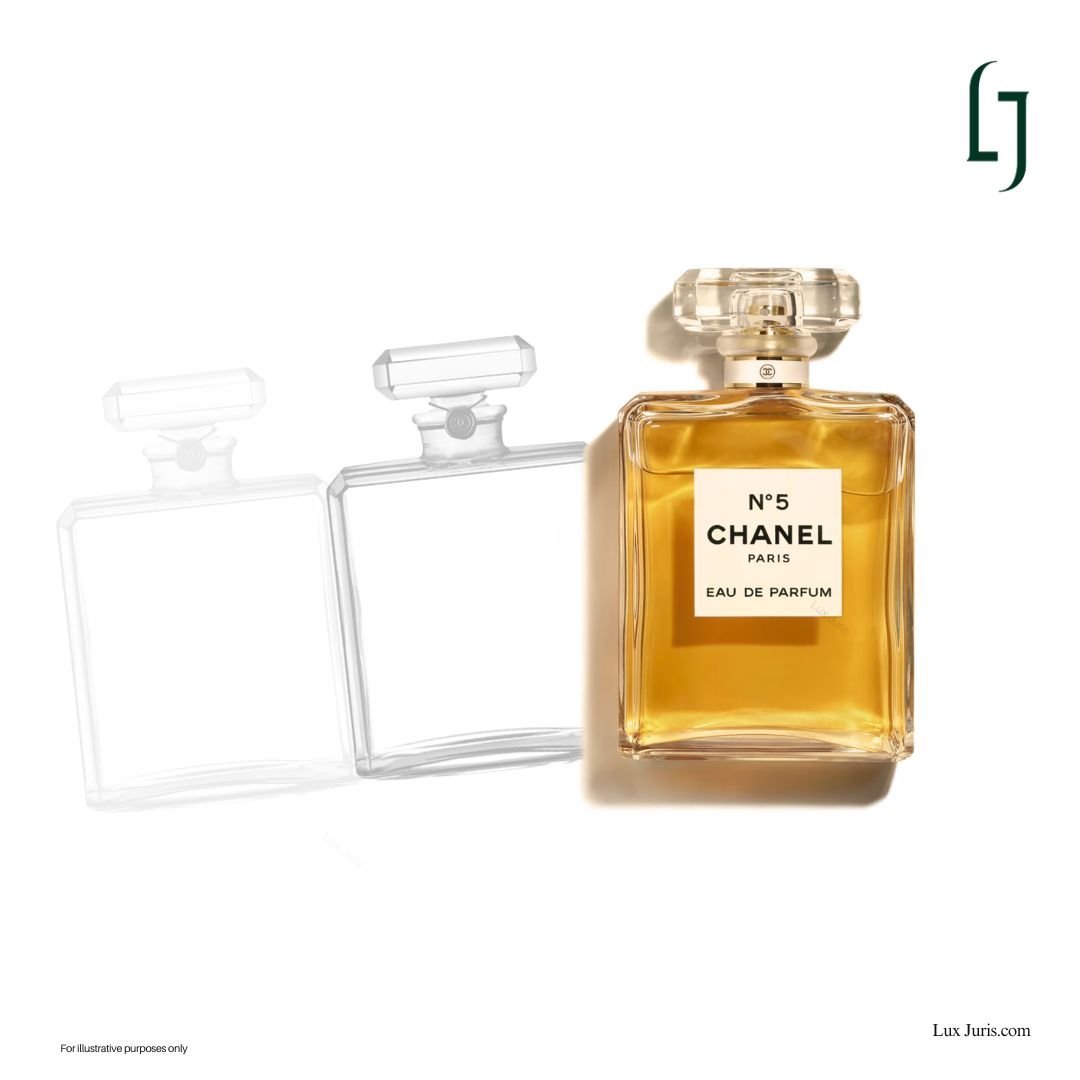
The EUIPO upheld Chanel’s opposition to a perfume bottle trade mark filed by Chaos Perfumes. Although it found only a low degree of similarity between the designs, it concluded that the later mark would take unfair advantage of the reputation of Chanel’s bottle shape.
On 9 October 2026, the Opposition Division of the European Union Intellectual Property Office (EUIPO) rejected a trade mark application filed by Romanian company Chaos Perfumes following an opposition by Chanel.
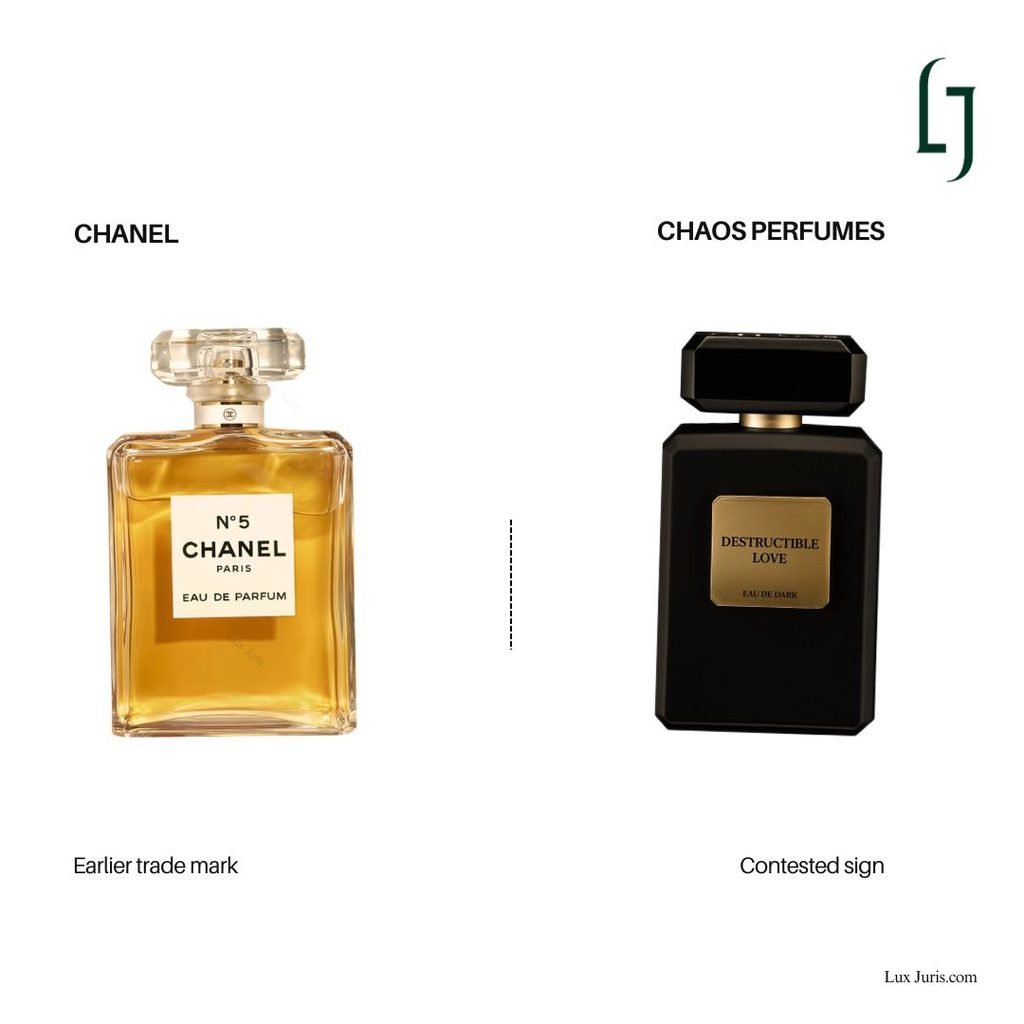
The dispute concerned the shape of a perfume bottle. Chanel relied on an earlier French trade mark protecting the three-dimensional shape of its bottle, while Chaos Perfumes sought to register a black rectangular bottle with a gold-coloured label and its own branding.
The EUIPO found that the designs were similar to only a low degree. However, it concluded that their similarities, the identity of the goods and the reputation of Chanel’s bottle shape were sufficient for the opposition to succeed under Article 8(5) of the EU Trade Mark Regulation (EUTMR).
The dispute over the bottle
Chaos Perfumes applied on 8 April 2024 to register a three-dimensional trade mark for perfumes and personal fragrances. Its design featured a rectangular bottle with rounded corners, a short neck, a wide, flattened stopper and a gold-coloured label. It also contained the words CHAOS, DESTRUCTIBLE, LOVE, EAU DE and DARK.
Chanel opposed the application on 23 September 2024, relying on earlier rights, including French trade mark registration No. 4 286 540, which protects the shape of a perfume bottle and its stopper.
Chanel argued that the contested design reproduced several features of its bottle and would benefit from the reputation built through decades of sales, advertising and public recognition.
Chaos Perfumes disagreed. It argued that consumers generally perceive perfume bottles as packaging rather than as trade marks. It also maintained that Chanel’s evidence established the reputation of the CHANEL brand and N°5 fragrance, but not necessarily the independent reputation of the bottle shape.
Can a bottle shape function as a trade mark?
The EUIPO first examined whether Chanel had shown genuine use of its registered bottle shape in France between 8 April 2019 and 7 April 2024.
Chanel submitted advertising materials, financial records, press coverage, retail displays, exhibitions and consumer research. The evidence showed that its bottle had been repeatedly presented as an important visual feature, sometimes without the CHANEL or N°5 names.
The Opposition Division accepted that consumers ordinarily see packaging as a container for goods. However, it considered that perfume bottles can also help consumers identify the business behind a fragrance.
It found that Chanel had used the bottle not merely as packaging but also as a sign of commercial origin. Its appearance alongside the CHANEL and N°5 names did not prevent the shape itself from functioning as a trade mark. Genuine use was therefore established for perfumes.
How Chanel established the bottle’s reputation
Chanel’s evidence traced the bottle’s history to the 1920s and documented its continued appearance in advertising, exhibitions and popular culture. The materials included Andy Warhol’s artwork, exhibitions in Paris and campaigns involving, among others, Nicole Kidman, Brad Pitt and Marion Cotillard.
One important piece of evidence was a consumer survey conducted in France in May 2016 among 2,438 women. When shown the bottle without branding, 72% spontaneously associated its shape with Chanel.
Chaos Perfumes argued that a design considered unusual a century ago might have become ordinary in the modern perfume industry. It also questioned whether the evidence showed current recognition of the bottle independently of Chanel’s branding.
The EUIPO considered that the survey, together with more recent advertising, press coverage and commercial evidence, established continuing recognition of the shape. It concluded that Chanel’s registered bottle had acquired a significant reputation in France for perfumes.
Low similarity and unfair advantage
The EUIPO found that both designs shared a compact rectangular body, rounded corners, a short central neck and a broad, flattened stopper. However, the Chaos Perfumes bottle differed in colour, label and wording.
The signs were found to be visually and conceptually similar to a low degree. The EUIPO also acknowledged that Chanel’s bottle had low inherent distinctiveness because it was a container for perfume.
Under Article 8(5) EUTMR, however, likelihood of confusion is not required. The EUIPO considered whether consumers would make a connection between the signs and whether the later mark would unfairly benefit from the earlier mark’s reputation.
Both marks concerned perfumes sold in the same market to the same general public. Given the reputation of Chanel’s bottle, the EUIPO found that French consumers would be likely to associate the Chaos Perfumes design with the earlier shape.
It further concluded that this association would make the later bottle easier to recognise and remember, giving it a commercial benefit from Chanel’s established reputation. The EUIPO therefore found a likely unfair advantage, despite the low degree of similarity.
Decision and outcome
The Opposition Division upheld Chanel’s opposition under Article 8(5) EUTMR and rejected Chaos Perfumes’ trade mark application in its entirety. The applicant was ordered to pay €620 in costs.
As the opposition succeeded on this ground, the EUIPO did not examine the remaining grounds or earlier rights relied upon by Chanel. The decision remains subject to appeal.
Conclusion
The decision does not give Chanel exclusive rights over rectangular perfume bottles generally. It concerns a particular registered shape, its established reputation and the similarities identified in the contested design.
The important finding is that low similarity and low inherent distinctiveness did not prevent Chanel from succeeding. The reputation acquired by its bottle shape, together with the connection consumers were likely to make between the designs, was sufficient to establish unfair advantage.
For perfume businesses, changing a bottle’s name, colour or label may not be enough where its overall appearance continues to draw commercial benefit from a reputed shape mark. The case shows how sustained use and consumer recognition can give packaging a trade mark identity of its own.
Source:
Decision: EUIPO Opposition Division, Chanel Société par Actions Simplifiée v. Chaos Perfumes Srl, Opposition No. B 3 224 328, 9 October 2026.