Dupe culture has trained an entire generation of sellers and shoppers to believe a simple rule. If you avoid fake packaging, avoid placing a luxury logo on your own product, and describe what you sell as “inspired by” a famous brand, you are on safe legal ground.
The logic feels intuitive. A seller who is upfront about selling an alternative seems far removed from someone selling counterfeits. Consumers know what they are buying. No one is being tricked into thinking they bought the real thing. Surely that transparency is enough to stay outside the reach of trade mark law.
It is not, and in an interim ruling delivered on 11 June 2026, the District Court of The Hague explained why.
In Coty Beauty Germany GmbH v Perfumedia B.V., trading as Petite Mort, the court looked past the disclaimer and asked a harder question. Not whether Petite Mort called its perfumes copies, but whether its entire business depended on capturing demand that belonged to someone else’s brand. The answer mattered far beyond one perfume company in Rotterdam. It speaks directly to how dupe marketing works today, across categories, across platforms, and across borders.
The case
Coty Beauty Germany GmbH holds exclusive licences to sell perfumes under marks including Burberry, Chloé, Gucci, Calvin Klein, and Hugo Boss. Perfumedia B.V. sold cheaper perfumes online and on social media, marketed as alternatives to these brands.
This was an interim proceeding, not a final judgment on the merits. The court decided on the evidence available at speed, and Coty must still bring a full case within six months if it wants a permanent ruling. That does not weaken the reasoning. It simply means practitioners should read this as a strong early signal, not the last word.
What Petite Mort actually did
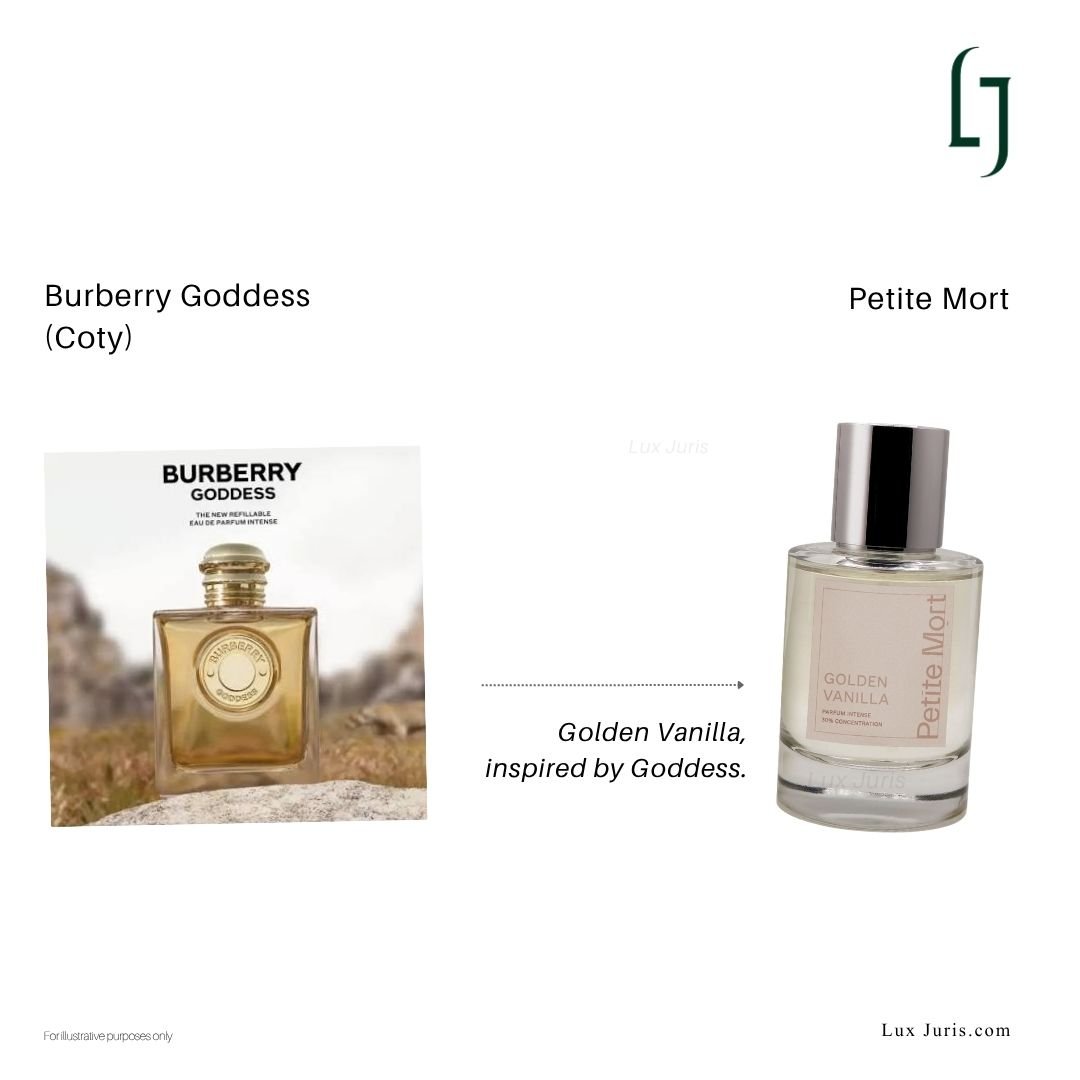
Petite Mort described its products with lines like “Sensual Rose, inspired by Chloe EDP” and “Golden Vanilla, inspired by Goddess.” The latter reference pointed directly to Burberry Goddess, one of Coty’s registered perfume marks.
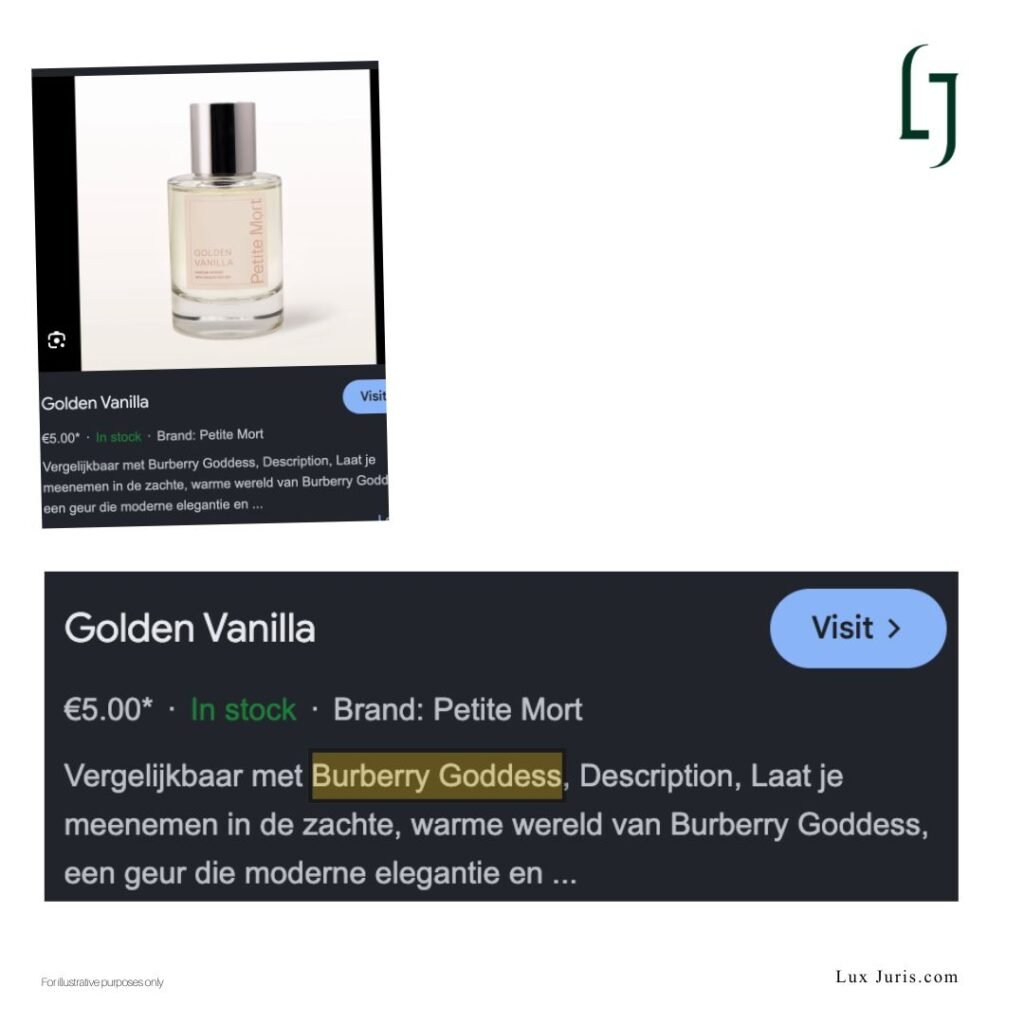
The company also embedded brand names such as Chloé, Burberry, Gucci, and Hugo Boss as hidden tags in its website’s backend search engine. A customer searching for Gucci on Petite Mort’s site would be shown Petite Mort’s own perfumes.
Its marketing claimed the perfumes smelled almost identical to the originals, lasted longer, cost less because they skipped expensive branding, and were cruelty free while implying the designer brands were not.
Why the court rejected the “inspired by” defence
Petite Mort argued that referencing well-known perfumes was a practical way to help consumers understand scent profiles. The court disagreed. A perfume can be described as floral, fresh, or sweet without naming a competitor’s mark.
The company also argued that hidden search tags should not count as trade mark use, since customers never saw them. The court rejected this too. Visibility is not the test. If the tag directs consumer demand toward your product, it counts as use in trade, whether or not anyone sees the code behind it.
This is the core lesson for anyone selling online. Trade mark risk lives in site architecture and product copy, down to individual word choices, not just storefront disclaimers.
Comparison may be lawful. Imitation is not.
EU law allows comparative advertising. A business can say its product is comparable to a branded one, provided the comparison is accurate, objective, verifiable, and does not present the product as an imitation or replica.
Petite Mort’s comparisons failed on all counts. Its claims about pricing, oil concentration, and longevity were either false or unproven. Its cruelty-free claim collapsed because EU law already bans animal testing on cosmetics sold in the bloc, meaning the implied contrast with Coty’s brands was misleading rather than informative.
But the court went further than fact-checking individual claims. It looked at the overall impression Petite Mort created. Telling consumers they could smell like their favourite designer fragrance for a fraction of the price did not read as comparison. It read as a claim of sameness. That shift, from “similar to” to “same as”, is what turned lawful marketing into infringement.
The bigger point for dupe sellers
Confusion is not the only harm trade mark law protects against. Even where consumers know they are buying an alternative, a business can still infringe if its entire model depends on capturing demand that another brand created through its reputation and investment.
Petite Mort did not sell fake bottles or counterfeit packaging. It built a business designed to intercept people already looking for Burberry, Gucci, or Chloé, and sell them something else instead, down to using the name of a specific registered scent such as Burberry Goddess to do it. The court treated that broader commercial strategy as central to the dispute, alongside the misleading comparative claims in Petite Mort’s advertising.
What this means going forward
Copying packaging is just one way to free-ride on a brand. Metadata, search tags, and comparison-led advertising can do the same work, sometimes more effectively, while customers know exactly what they are buying.
That no longer guarantees safety. The Hague ruling asks a sharper question than “did you call it a copy.” It asks whether the business is building its own value, or simply converting someone else’s brand equity into revenue, one product name at a time.
For any seller relying on “inspired by” language, that is the question worth answering honestly before a cease and desist letter arrives.
Source: