How different does a brand name really need to be?
Many businesses entering the European market assume that small changes in a name, a different spelling, or a slightly adjusted structure will be enough to avoid trade mark issues. In practice, EU trade mark law does not operate at that level of surface difference.
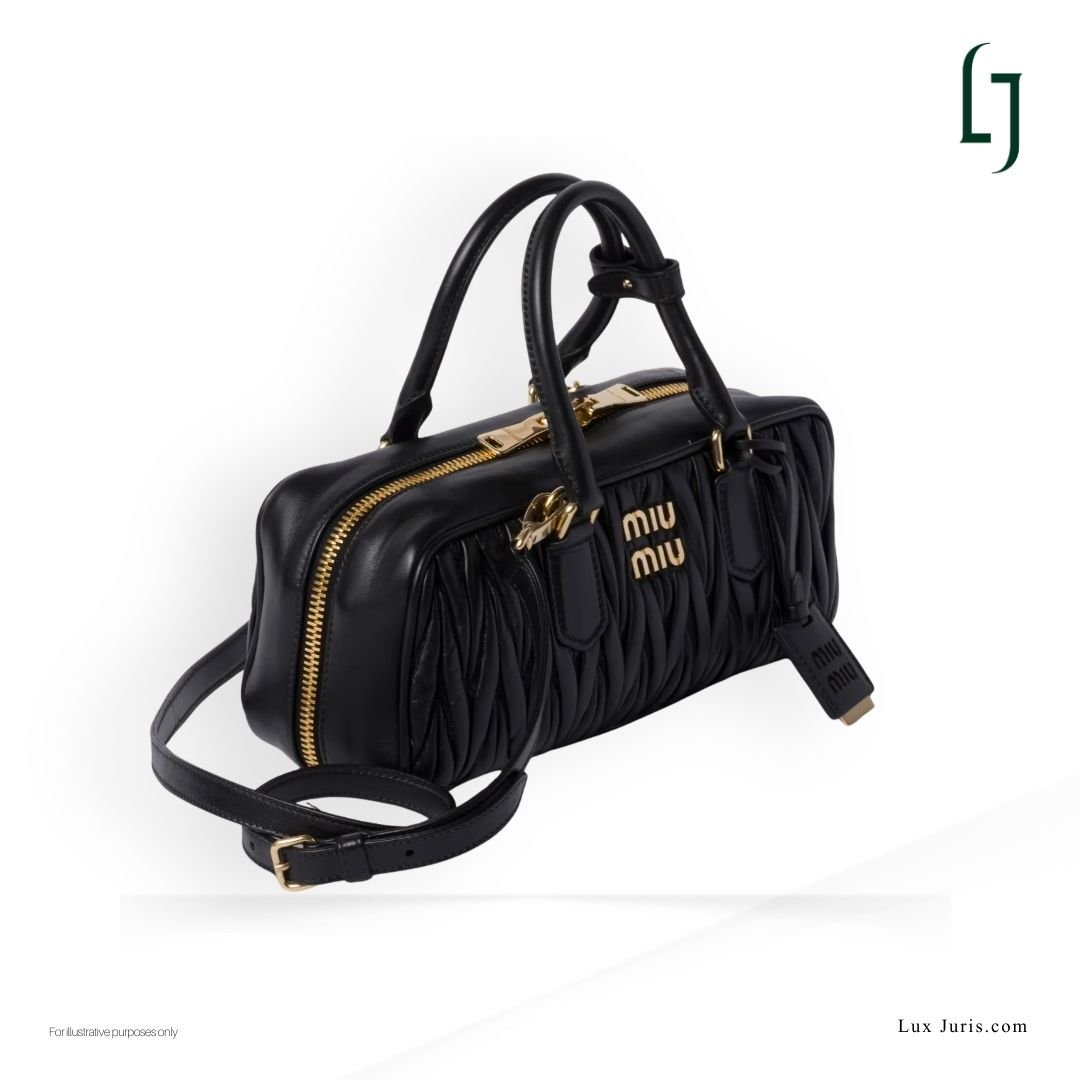
To see how this works, it helps to take one reference point: MIU MIU.
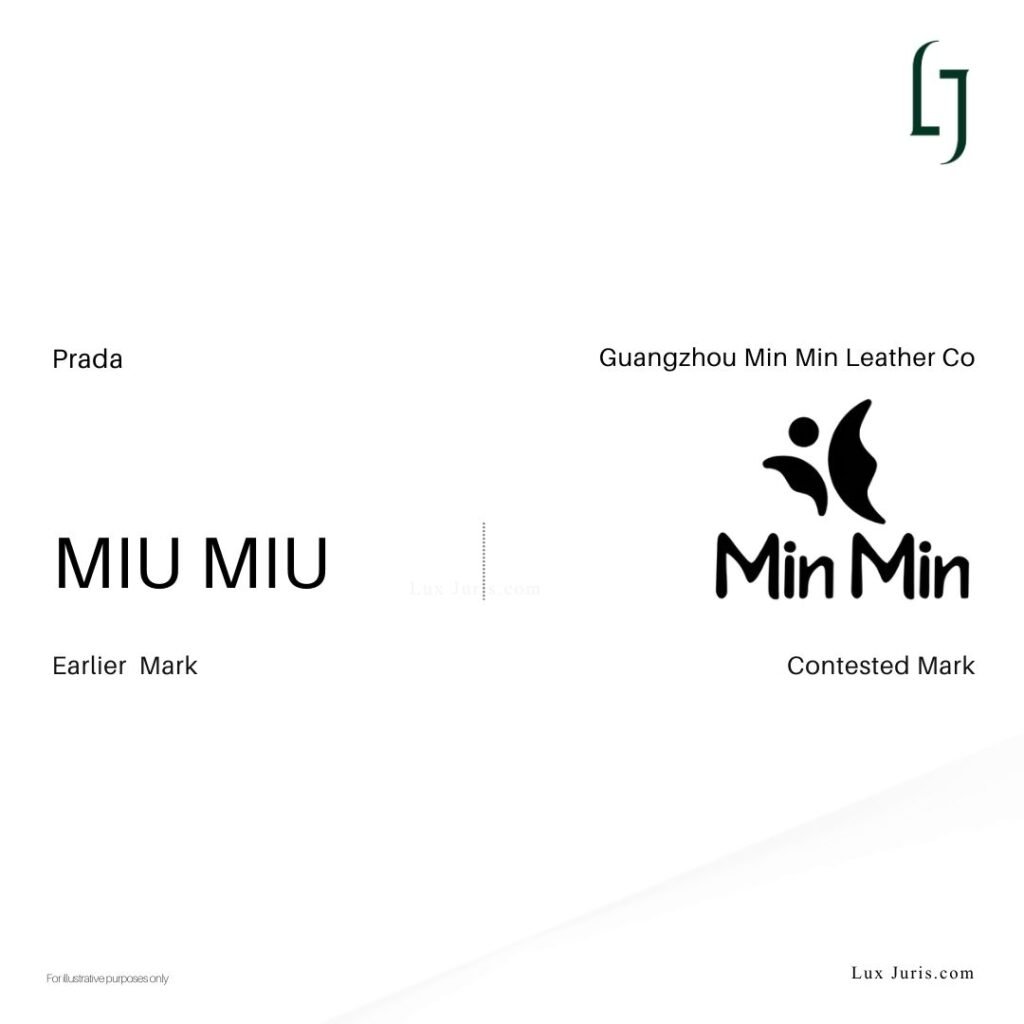
Across a series of opposition decisions before the EUIPO, MIU MIU has been used as a benchmark to test how far similar but not identical branding can go. Applications such as MUMU and MIN MIN do not copy the mark directly. The letters change, the spelling shifts, and nothing is identical on paper. But the structure remains close: repetition of short elements, similar rhythm, similar sound, and a similar overall impression.
That is where the legal analysis begins. Not with spelling. With perception.
Consumers do not process brand names like lawyers or designers. They do not compare letters one by one. They hear a name, see it once or twice, and store a simplified version of it. Where a mark already has strong recognition in the market, that simplified memory becomes the real reference point in legal assessment.
The Real Legal Question Is Not Always Confusion
A common assumption is that trade mark infringement only exists where consumers are actively deceived into believing a product comes from the original brand. That is only part of the framework.
In EU trade mark law, particularly where a mark has reputation, the question often goes further. It is not only whether consumers are confused. It is whether a later mark benefits from the recognition, attraction, or commercial pull already built into an earlier one. Whether, on seeing the later name, a consumer is reminded of the original brand, even while fully understanding the products are not connected.
This matters because trade mark protection in Europe is not limited to preventing direct confusion. It also protects the value that builds around a mark over time through consistent market presence, advertising, retail visibility, and repeated exposure.
This is reflected in Article 8(5) of the EU Trade Mark Regulation. A mark with a reputation in the EU is protected against later marks that would, without due cause, take unfair advantage of that reputation. The key point is simple. The law is not only concerned with deception. It is also concerned with commercial advantage gained through association.
A later name can therefore create legal risk even if it is technically different, even if there is no confusion, and even if consumers know it is not the same brand.
The MIU MIU Cases Show the Pattern Clearly
This becomes easier to see through opposition proceedings involving MIU MIU before the EUIPO.
As MIU MIU strengthened its position in the European luxury market, applications began appearing that did not copy the mark directly but followed its structure closely. They relied on repetition. They relied on short syllables. They relied on a rhythm that feels familiar when spoken quickly.
MUMU was one such application. Filed for optical goods, it was challenged on the basis that its structure and sound were too close to MIU MIU. The EUIPO accepted that the similarity was sufficient to create association, particularly given the established recognition of MIU MIU in the market, and the application was refused.
MIN MIN followed the same pattern. In Prada S.A. v. Guangzhou Min Min Leather Co., Ltd., the application covered bags, handbags, luggage, and related leather goods. The EUIPO Opposition Division found that both marks repeated a short element twice, both began with the same sound, and both created a similar spoken rhythm. Visually and phonetically, the similarity was assessed as above average. Combined with the reputation of MIU MIU in the EU, especially in relation to handbags, the opposition succeeded under both likelihood of confusion and reputation-based grounds.
What connects these cases is not copying in the literal sense. It is structure. The way the name feels when read or heard. And that is exactly what dupe-style branding often relies on.
Why Small Differences Often Fail
One recurring misunderstanding in trade mark strategy is the idea that difference can be measured mechanically. Change a letter, adjust a spelling, and the risk disappears. EU trade mark law does not operate on that assumption.
The assessment is based on overall impression. Not side-by-side comparison. Not technical breakdown. But how the mark is encountered in real market conditions.
Consumers do not engage with brands slowly. They see them quickly, often once, and retain an imperfect version in memory. What stays is not exact spelling but rhythm, structure, and sound. That is the version the law protects.
Where a mark already has strong recognition, that imperfect memory becomes central to the analysis. A later mark does not need to replicate the original. It only needs to reproduce enough of its structure to trigger association.
Where reputation is established, the scope expands further. Under Article 8(5), protection covers situations where a later mark benefits from the earlier mark’s distinctive character or reputation. If a new name immediately evokes an existing one, even without confusion, that can be enough.
This is why small adjustments often fail to create real legal distance.
What This Means for Businesses Entering the European Market
Many businesses still treat trade mark selection as a naming exercise. If the spelling is different, the assumption is that the legal risk is gone. EU practice shows something more specific.
The closer a name moves toward the structure, rhythm, or sound of an existing mark, the higher the risk becomes. This is especially true where the earlier mark already has recognition in the EU market. In those cases, protection does not stop at identical goods or identical names. It extends to any situation where a later mark draws commercial advantage from the earlier one’s presence.
The MIU MIU decisions involving MUMU and MIN MIN illustrate how this works in practice. Neither applicant reproduced the mark directly. But the EUIPO found the same problem in each case: the later marks were still close enough to the original to carry its commercial pull, and that counted as an advantage they had not earned.
For businesses entering the European market, that is the point worth understanding. EU trade mark law does not only ask whether a name is different. It asks whether it is still close enough to feel familiar. Where the answer is yes, that familiarity is not a grey area. It is something the law already covers.