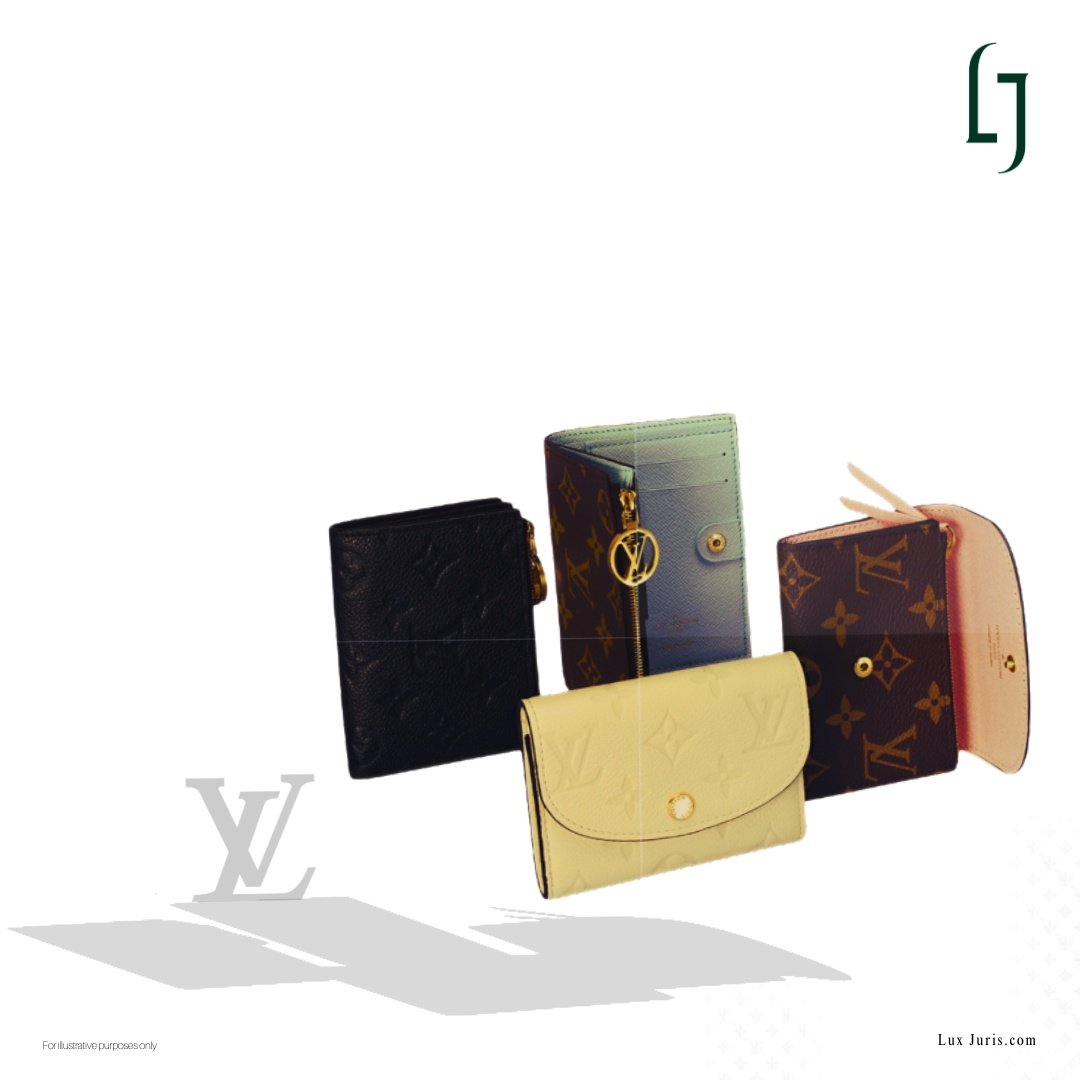
The counterfeit economy no longer operates only through obvious fake handbags sold in hidden markets. Increasingly, it presents itself through the language of craftsmanship, sustainability, customisation, and upcycling.

That shift is visible in the recent Singapore dispute involving Louis Vuitton. The trademarks being copied were not generic logos, but elements of Louis Vuitton’s iconic monogram pattern, reproduced on phone cases, watch straps, pouches, and accessories marketed as reconstructed from authentic materials. Instagram storefronts replaced physical shops. Authentication claims replaced straightforward deception.
The recent decision of the Court of Appeal of Singapore in Louis Vuitton Malletier v. Ng Hoe Seng (formerly trading as EMCASE SG) [2026] confronts that reality directly.
The judgment goes beyond counterfeit Louis Vuitton products. It clarifies how Singapore calculates trademark damages where counterfeit goods are sold online, including products marketed as upcycled or made from supposedly authentic luxury materials.
The Basic Facts
Ng Hoe Seng, trading as EMCASE SG, sold accessories through Instagram accounts including “emcase_sg” and “emcrafts_sg”. The products included phone cases, passport covers, pouches, watch straps, key cases, cardholders, spectacle cases, phone bags, and cigarette cases bearing signs identical to one or more of Louis Vuitton’s registered trademarks.

Some listings described the products as made from authentic Louis Vuitton materials. Others stated that the products were “upcycled” and “authenticity guaranteed and verified through a 3rd party authenticator”.
Louis Vuitton conducted trap purchases and testing. At least two purchased items used canvas or material that was not from genuine Louis Vuitton products.
Hoe Seng did not appear in the proceedings. Liability had already been established. The appeal concerned only damages.
The Real Issue: How Damages Are Counted
The central issue was Section 31(5)(c) of Singapore’s Trade Marks Act.
Louis Vuitton argued that damages should be calculated per counterfeit mark. Since 13 registered marks appeared across the infringing products, each mark on each product category, Louis Vuitton argued, should attract a separate award of up to S$100,000. That produced a theoretical ceiling of S$2.9 million. On appeal, Louis Vuitton reduced its claim to S$1.45 million.
The High Court rejected that interpretation and awarded S$200,000.
The Court of Appeal agreed the per-mark approach was wrong, but found the award too low. It increased damages to S$510,000.
The court held that the statute works by type of goods, not by the number of trademarks appearing on one product. Because nine categories of goods were involved, the relevant ceiling was S$900,000.
That distinction matters. Luxury products often combine several registered marks: logos, word marks, monograms, and pattern marks. The court held that multiplying damages simply because a brand uses multiple marks on the same product would disconnect damages from actual commercial harm.
Why Singapore Rejected the US Model
Singapore introduced statutory damages while implementing the US-Singapore Free Trade Agreement, but Parliament did not copy the American model.
The United States Lanham Act expressly allows damages to be calculated per counterfeit mark for each type of goods. Singapore’s law uses different wording. The Court of Appeal treated that difference as intentional, showing that Parliament chose a narrower framework when introducing statutory damages.
The judgment also clarified an important point: Singapore’s statutory damages regime remains compensatory, not punitive. Deterrence is relevant, but damages must still relate to actual loss or wrongful gain.
How the Court Reached S$510,000
The court rejected a single lump-sum award. Instead, it assessed damages separately for each of the nine product categories.
Several aggravating factors were present. Ng Hoe Seng operated Instagram accounts with over 16,000 and 17,000 followers, used LV to identify products, promoted them through influencer accounts, continued selling after the injunction, and made one account private after Louis Vuitton’s lawyers contacted him again.
He also did not participate in the proceedings, leaving the court without evidence of actual profits or full sales volume.
The court awarded:
S$70,000 each for phone cases, key cases, and pouches
S$60,000 each for watch straps and cardholders
S$50,000 each for passport covers, phone bags, and spectacle cases
S$30,000 for cigarette cases
Total: S$510,000.
Why the “Upcycled” Narrative Failed
The most important part of the judgment may not be the damages calculation. It is the court’s treatment of the authenticity narrative.
Luxury upcycling has become a major commercial category. Many designers legitimately repurpose discarded or surplus materials into new products. But the same language can also be used to disguise counterfeit activity.
This case exposed that distinction clearly.
The question is not whether some original material once existed in the supply chain, but whether the new product still trades on another brand’s trademarks.
Here, it did.
The products were sold because consumers recognised Louis Vuitton’s monogram and branding. Some materials were not genuine at all. The court treated the authenticity claims, combined with counterfeit findings, as aggravating when assessing damages.
That matters beyond Singapore. Once reconstructed products continue selling because of another brand’s recognisable trademarks, repurposing may cross into trademark infringement.
Instagram Reach Increased Exposure
The judgment also reflects how counterfeit enforcement has shifted.
Online sellers often assume Instagram operations appear informal or small-scale. The court treated social media reach differently. Follower counts, influencer promotion, account switching, and continued selling after legal notices all pointed to broader commercial scale.
The court also noted that the 121 documented instances of infringement likely reflected only part of the business. In that context, Instagram was not incidental to the case. It expanded the seller’s reach and increased the scale of exposure.
What the Judgment Means
The decision gives Singapore a clearer framework for counterfeit damages. Multiple trademarks on one product do not automatically multiply liability. Courts will assess damages by the type of goods involved and the seriousness of each category.
For businesses selling luxury goods under the label of “upcycling” or reconstruction, the warning is direct.
Calling products “upcycled”, “reworked”, or “authentic” does not protect a business where the commercial value still depends on another brand’s trademarks. And this judgment shows Singapore courts are prepared to treat that conduct seriously.