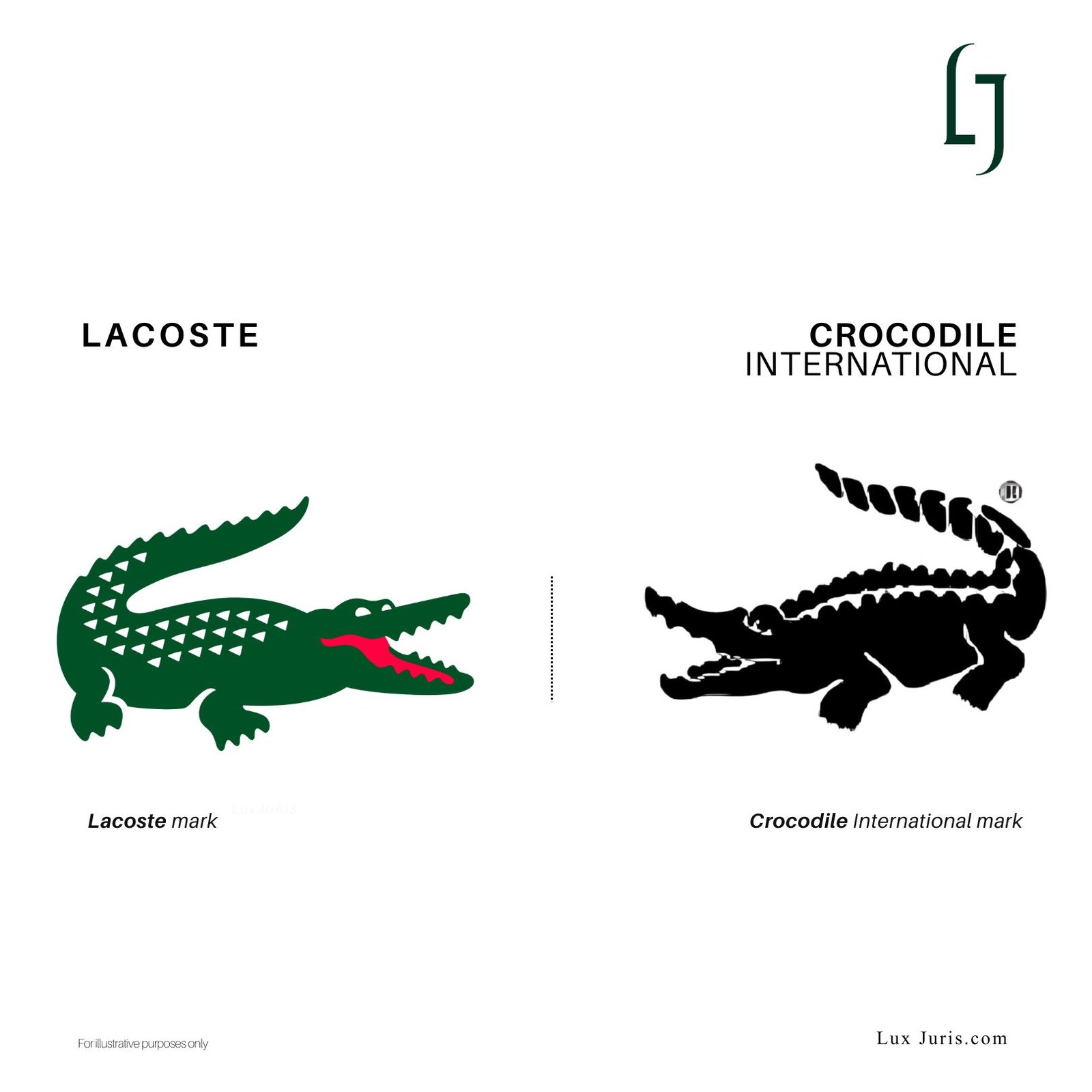
For many people around the world, a small green crocodile stitched on a shirt immediately brings one brand to mind: Lacoste. The French clothing company has used this symbol for decades and built much of its identity around it. But Lacoste is not the only brand that uses a crocodile on its clothes.
Crocodile International, a Singapore-based apparel company, has also used a crocodile logo for many years, especially across parts of Asia. Because both brands rely on a similar animal symbol, disagreements between them have appeared in different countries over time.
One of those disagreements reached the Delhi High Court in India. where the central question was simple in form but complex in law: could Crocodile International continue selling clothing in India using its crocodile logo, or was the logo too close to Lacoste’s well-known symbol?
In March 2026, the Delhi High Court delivered its final decision. The court largely sided with Lacoste and ruled that Crocodile International could not use the disputed logo in India.
Two Clothing Brands Built Around the Same Symbol
Lacoste is a French sportswear brand founded by tennis player René Lacoste. Its small green crocodile logo is one of the most recognisable symbols in fashion and usually appears on the chest of its shirts and other clothing.
Crocodile International, based in Singapore, also built its brand around a crocodile image. The company was founded by businessman Tan Hian Tsin, who became closely linked with the brand and was widely known in Singapore as “Mr Crocodile.”
Both companies sell similar products, such as polo shirts and casual clothing, and both place a crocodile symbol on their garments. Because of this overlap, confusion between the two brands has been a recurring concern.
Earlier Disagreements Between the Companies
The conflict between the two brands did not begin in India.
One of the earliest disputes happened in Japan in 1971, when Crocodile International challenged Lacoste’s entry into that market. Lacoste defended itself by explaining that people mainly recognised its brand through the name “LACOSTE,” not just through the crocodile symbol.
Another disagreement followed in Singapore in 1980. Crocodile International objected to the activities of Lacoste’s local partner and asked it to stop using its crocodile logo. Lacoste responded by saying that its brand identity depended mainly on the word “LACOSTE,” and that its animal symbol was not meant to copy Crocodile International’s logo.
After these repeated clashes, both companies tried to avoid further conflicts by reaching an agreement.
The 1983 Agreement Between the Companies
In June 1983, the two sides signed an agreement that allowed each company to continue using its own crocodile logo in certain parts of Asia.
The agreement listed the places where both companies could operate without interfering with each other. These places included Taiwan, Singapore, Indonesia, Malaysia and Brunei. The companies also agreed to work together if other businesses tried to copy their logos.
However, the agreement only applied to the countries specifically listed in the document. India was not one of them. This detail later became very important in the case before the Delhi High Court.
A Letter That Later Became Important
Crocodile International later pointed to a letter written in August 1985. In that letter, the company suggested that the same understanding between the two brands should also apply to other countries, including India, Korea, Bangladesh and Pakistan.
The letter also mentioned that Crocodile International would not object to certain trademark applications filed by Lacoste in those places.
According to Crocodile International, this letter showed that both companies had informally agreed to stay out of each other’s way in more markets than those listed in the 1983 agreement.
Lacoste did not agree with this interpretation. It argued that the letter was only a suggestion from one side and was never turned into a formal agreement.
Both Brands Appear in India
Over time, both companies also became connected to the Indian market.
Lacoste secured protection for its crocodile logo in India in 1983 and later began selling its products there through a local partner in 1993. During the 1990s, the company spent money on advertising and building its presence in the country.
Crocodile International had an older trademark registration in India linked to its crocodile logo, dating back to 1952. It also obtained another registration in 1990 for the name “CROCODILE” together with a logo.
However, Crocodile International only started selling clothing in India much later. The company began advertising its products in 1997 and opened stores in 1998 under the name Crocodile Galleries.
As both brands expanded in India, Crocodile International began using the crocodile symbol on its clothing without the word “CROCODILE” beside it, making its logo look much closer to the one used by Lacoste. Lacoste filed a suit in the Delhi High Court seeking to restrain Crocodile International from using the mark.
The First Court Decision in 2024
The dispute was first decided by a single judge of the Delhi High Court in August 2024.
After comparing the two logos, the court concluded that Crocodile International’s crocodile looked too similar to Lacoste’s crocodile emblem. The court noted similarities in the shape, posture and overall appearance of the crocodiles.
Because of these similarities, the judge believed that shoppers might confuse the two brands. The court therefore ruled that Crocodile International could not use the disputed crocodile logo in India.
The court also rejected the argument that the 1983 agreement allowed Crocodile International to operate freely in India. Since India was not listed in the agreement, the judge said the document did not apply there.
The 1985 letter was also considered too unclear to count as a binding agreement between the companies.
However, Lacoste did not win on every point. The court rejected its copyright claim, finding that the visual similarities between two realistic depictions of a crocodile did not necessarily indicate copying, given the constraints of representing the animal.
The court also rejected Lacoste’s passing off claim. According to the judge, Lacoste had not shown enough evidence that it had a strong reputation in India when Crocodile International entered the market in 1998.
Both Companies Appeal
After the 2024 decision, both companies challenged parts of the ruling.
Crocodile International appealed the finding on logo similarity. It argued that the 1985 letter showed Lacoste had informally accepted its presence in India, and that Lacoste was therefore not entitled to restrain it from using the mark there.
Lacoste accepted the decision on trademark infringement but appealed the parts of the judgment where the court had rejected its claims on copyright and passing off.
With both sides challenging the ruling, the Delhi High Court’s Division Bench stepped in to reconsider the matter.
The Delhi High Court’s Final Decision in 2026
On 9 March 2026, the Division Bench of the Delhi High Court delivered its final judgment.
The court agreed with the earlier decision that Crocodile International’s logo was too similar to Lacoste’s crocodile. It confirmed that Crocodile International could not use the disputed logo in India.
The court also disagreed with the earlier ruling on copyright. The judges said that a crocodile can be drawn in many different ways, and that the earlier court had been too quick to say that all drawings of a crocodile must look alike. Because of this, the court concluded that Crocodile International’s logo had copied important visual features of Lacoste’s crocodile.
However, the court agreed with the earlier decision on passing off. It said that Lacoste had not shown enough proof that it had a strong reputation in India when Crocodile International entered the market in 1998. For that reason, the passing off claim was rejected.
The court also dismissed Crocodile International’s argument that Lacoste had waited too long to challenge the logo.
Conclusion
The Delhi High Court’s decision brings the Indian part of the long-running dispute between Lacoste and Crocodile International to an end.
The court ruled that Crocodile International’s crocodile logo is too similar to Lacoste’s well-known symbol and cannot be used in India. It also concluded that the design of the logo copied key visual elements of Lacoste’s crocodile.
At the same time, the court rejected Lacoste’s passing off claim, finding that Lacoste had not established a strong enough reputation in India at the time Crocodile International entered the market.
Beyond the dispute between the two brands, the case shows how strongly courts can protect well-known logos, even when they involve simple images such as animals. It also highlights the importance of clear agreements between companies when they operate in different parts of the world.
Source: