Colour in fashion is emotional, cultural, cyclical, referential, and constantly redistributed through trend logic, runway diffusion, imitation, and seasonal palettes. Trademark law, by contrast, does not protect emotion, culture, or cycles. It protects source, and only when the public reads a sign, without hesitation, as pointing to a single brand origin.
A colour can be trademarked only when consumers recognise it as a signature of a single brand, independent of logos, symbols, or wordmarks. The law treats colour marks with scepticism because colour is generally considered a common element, and exclusivity can be claimed only through demonstrable secondary meaning established over an extended period of commercial use.
The Legal Threshold
Unlike wordmarks or logos, colours are not automatically distinctive under trademark law. A fashion brand must show that the colour has acquired distinctiveness, meaning consumers see it as identifying the brand rather than just the product itself, built through long, consistent, and exclusive use.
The test is evidentiary, not philosophical, and typically turns on whether a brand can show:
- Uninterrupted, disciplined and uniform use, not seasonal reinterpretation, not shade variation, not palette expansion.
- Precise application, because broad colour claims fail where specific placements succeed.
- Consumer reliance on colour to identify source, proven through surveys or market recognition data.
- A history of enforcement, showing the brand treated the colour as an asset worth policing.
- No functional distortion of competition, meaning exclusivity does not block competitors from commercially necessary design choices.
If a colour is considered functional, serving a practical purpose rather than identifying the brand, trademark law will not allow it to be protected, because common design elements cannot be monopolised.
Fashion’s Most Recognised Colour Trademarks
Only a small number of brands have successfully converted a colour into a trademark asset, all of them proving the same commercial reality: the market learned the colour before the law protected it.
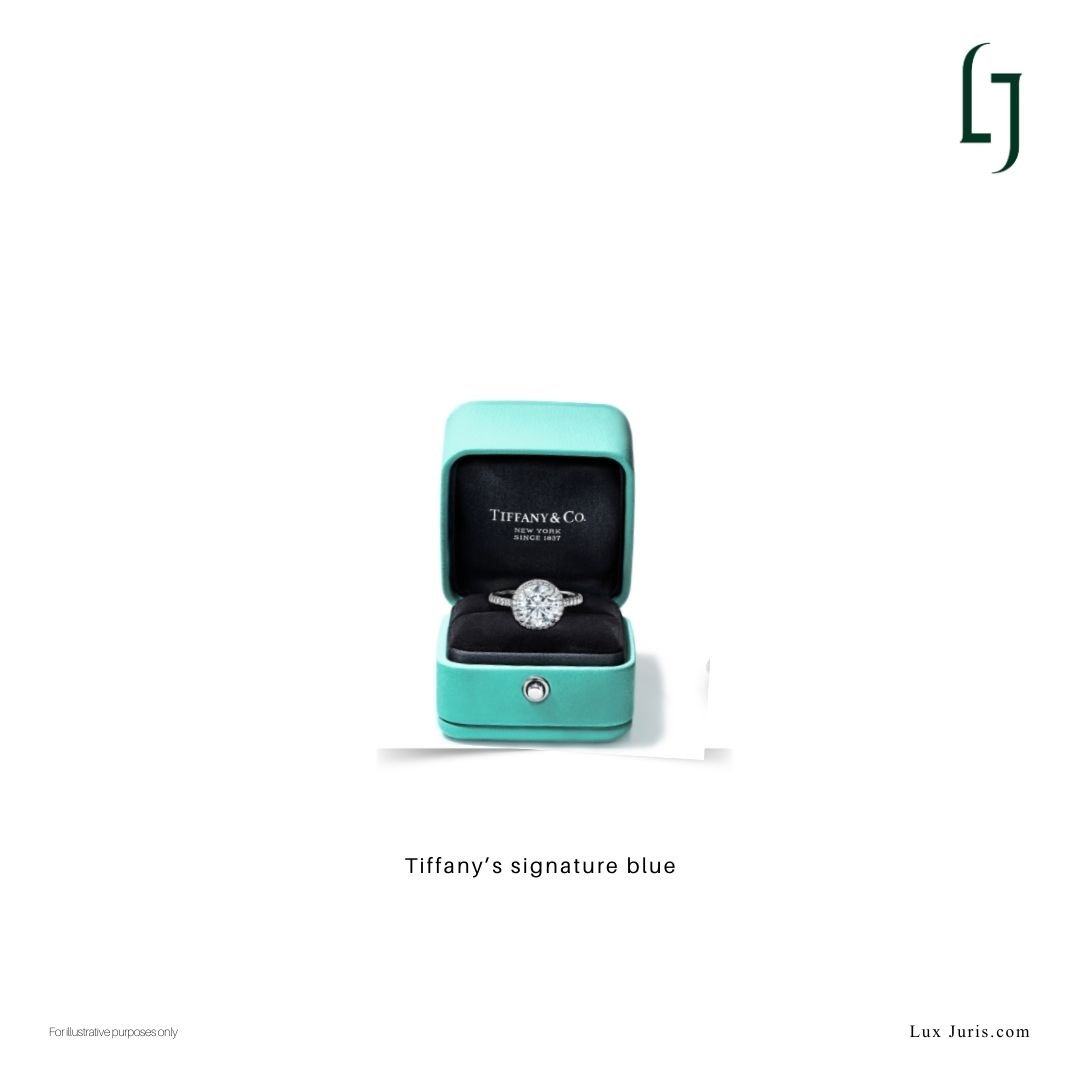
Tiffany & Co.’s robin-egg blue, used for decades on jewellery packaging and retail presentation, secured protection not for the colour itself in all fashion contexts, but for the colour as applied to a specific category of goods. The brand proving that consumers recognise origin from the shade even when the name is absent, a rare example of singular source association forged through long, consistent, and documented use.

Christian Louboutin’s red outsole mark remains the most illustrative colour trademark in fashion. It protects red on the sole only when contrasted with a differently coloured upper, confirming that the law safeguards the sign as consumers have learned to read it, not the colour as an abstract concept. Louboutin does not own red shoes generally or red across all footwear contexts, but only red in a precise, consistent placement that identifies the brand.

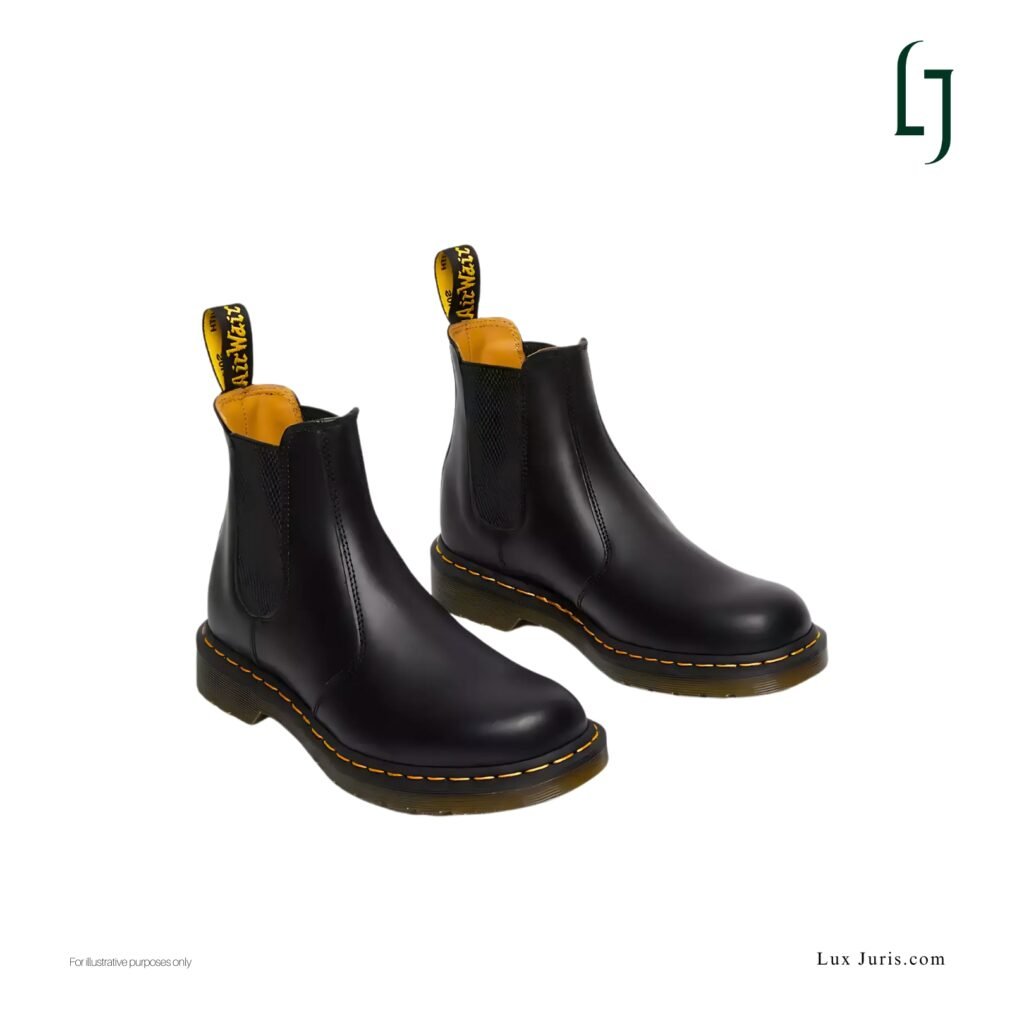
Dr Martens’ yellow stitching, although it began as a manufacturing detail, acquired trademark status through decades of uninterrupted market use, the stitching appearing so uniformly, and for so long, that consumers eventually came to read it as origin rather than construction, illustrating that even functional details can evolve into trademarks if conditioning is specific, continuous, and recognisably source-identifying.
Why Colours Are Hard To Trademark
Trademarks can last indefinitely if maintained, but fashion moves seasonally, rewarding reinvention. Colours are shared and expected to remain accessible, so most colours in fashion cannot be protected because they lack singularity. Consumers usually see colour in garments, accessories, and footwear as decoration rather than a sign of origin, unless a brand applies it with such consistency over time that it moves beyond trends and becomes a recognisable mark.
Trademark offices also consider whether a colour could limit competition. In fashion, the case against exclusive rights is often practical: colours are basic, commonly used, and expected to remain available. Even long-term use may not be protected if it prevents other brands from using the same colour.
Conclusion
Colour can be trademarked in fashion, but only when a brand proves that the market itself has already delivered the verdict, teaching consumers to see only one origin when they see the shade. The law then formalises a commercial association the public has already learned to treat as identity, and even then protects it narrowly and specifically, only to the extent that it signals source without preventing others from using it.
A brand that cycles shades, expands palettes, or allows colour logic to be trend-driven rather than source-driven will almost always fail, because trademark law interprets variation as dilution of identity, not proof of it.
Jurisdictional note: The principles described here draw primarily on US case law and trademark practice, where Tiffany, Louboutin, and Dr Martens set the most illustrative precedents. Similar rules apply in the EU and UK, but registration and enforcement may differ in scope.